
-
Performance Fermented Yeast Protein with Ultrasorb Tech | Cold Coffee | 6 kg
Regular price ₹10,999Sale price ₹10,999 Regular priceUnit price per₹15,99931% OFFSave 31%Sale -
Performance Fermented Yeast Protein with Ultrasorb Tech | Cold Coffee | 4 kg
Regular price ₹8,499Sale price ₹8,499 Regular priceUnit price per₹11,39925% OFFSave 25%Sale -
Performance Fermented Yeast Protein with Ultrasorb Tech | Cold Coffee | 1 kg
Regular price ₹2,299Sale price ₹2,299 Regular priceUnit price per₹2,99923% OFFSave 23%Sale -
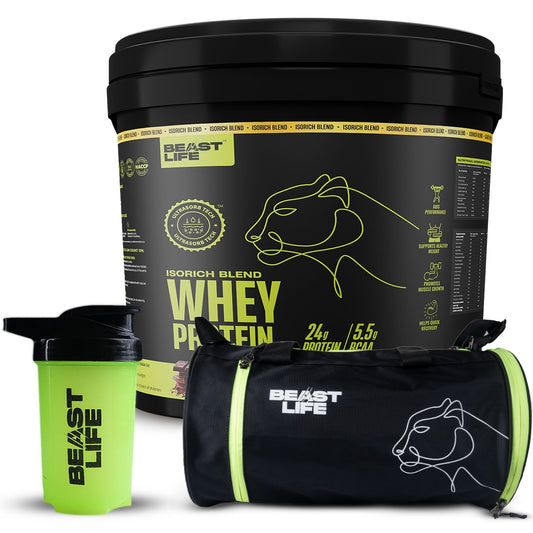 Chocolate | 3.696Kg
Isorich Blend Whey Protein with Ultrasorb Tech | Chocolate | Free Gym Bag and Shaker | 3.696 kg
Regular price ₹15,713Sale price ₹15,713 Regular priceUnit price per₹19,59619% OFFSave 19%Sale -
Performance Fermented Yeast Protein with Ultrasorb Tech | Cold Coffee | 2 kg
Regular price ₹4,398Sale price ₹4,398 Regular priceUnit price per₹5,79924% OFFSave 24%Sale -
Performance Fermented Yeast Protein with Ultrasorb Tech | Chocolate | 4 kg
Regular price ₹8,499Sale price ₹8,499 Regular priceUnit price per₹10,19916% OFFSave 16%Sale -
 Cookies & Cream | 4kg
Performance Fermented Yeast Protein with Ultrasorb Tech | Cookies & Cream | 4 kg
Regular price ₹8,499Sale price ₹8,499 Regular priceUnit price per₹11,39925% OFFSave 25%Sale -
Performance Fermented Yeast Protein with Ultrasorb Tech | Mango | 1 kg
Regular price ₹2,299Sale price ₹2,299 Regular priceUnit price per₹2,99923% OFFSave 23%Sale -
Performance Fermented Yeast Protein with Ultrasorb Tech | Malai Kulfi | 2 kg
Regular price ₹4,398Sale price ₹4,398 Regular priceUnit price per₹5,79924% OFFSave 24%Sale -
Performance Fermented Yeast Protein with Ultrasorb Tech | Chocolate | 2 kg
Regular price ₹4,398Sale price ₹4,398 Regular priceUnit price per₹5,19915% OFFSave 15%Sale -
 Cookies & Cream | 2kg
Performance Fermented Yeast Protein with Ultrasorb Tech | Cookies & Cream | 2 kg
Regular price ₹4,398Sale price ₹4,398 Regular priceUnit price per₹5,79924% OFFSave 24%Sale -
Performance Fermented Yeast Protein with Ultrasorb Tech | Mango | 4 kg
Regular price ₹8,499Sale price ₹8,499 Regular priceUnit price per₹11,39925% OFFSave 25%Sale -
 Rich Chocolate | 1.848 kg
Pro Concentrate Whey Protein with Ultrasorb Tech | Rich Chocolate | 1.848 kg
Regular price ₹6,698Sale price ₹6,698 Regular priceUnit price per₹7,79814% OFFSave 14%Sale -
Performance Fermented Yeast Protein with Ultrasorb Tech | Malai Kulfi | 4 kg
Regular price ₹8,499Sale price ₹8,499 Regular priceUnit price per₹11,39925% OFFSave 25%Sale -
Shake & Gain Combo
Regular price ₹3,814Sale price ₹3,814 Regular priceUnit price per₹3,698-4% OFFSave -4% -
Isorich Blend Whey Protein with Ultrasorb Tech | Coffee | 924 g
Regular price ₹3,999Sale price ₹3,999 Regular priceUnit price per₹4,99920% OFFSave 20%Sale -
Pro Concentrate Whey Protein with Ultrasorb Tech | Malai Kulfi | 924 g
Regular price ₹3,499Sale price ₹3,499 Regular priceUnit price per₹3,99912% OFFSave 12%Sale -
Pro Concentrate Whey Protein with Ultrasorb Tech | Mango | 1.848 kg
Regular price ₹6,698Sale price ₹6,698 Regular priceUnit price per₹7,79814% OFFSave 14%Sale -
Pro Concentrate Whey Protein with Ultrasorb Tech | Rich Chocolate | 924 g
Regular price ₹3,499Sale price ₹3,499 Regular priceUnit price per₹3,99912% OFFSave 12%Sale -
 Performance Protein | Pack Of 5
Performance Fermented Yeast Protein with Ultrasorb Tech | Chocolate | Pack of 5
Regular price ₹699Sale price ₹699 Regular priceUnit price per₹79912% OFFSave 12%Sale -
Performance Fermented Yeast Protein with Ultrasorb Tech | Birthday Cake | 1 kg
Regular price ₹2,299Sale price ₹2,299 Regular priceUnit price per₹2,99923% OFFSave 23%Sale -
Performance Fermented Yeast Protein with Ultrasorb Tech | Thandai | 1 kg
Regular price ₹2,299Sale price ₹2,299 Regular priceUnit price per₹2,99923% OFFSave 23%Sale -
Performance Protein | Value Pack | Chocolate | 3 kg
Regular price ₹6,897Sale price ₹6,897 Regular priceUnit price per₹8,00713% OFFSave 13%Sale -
Performance Fermented Yeast Protein with Ultrasorb Tech | Malai Kulfi | 1 kg
Regular price ₹2,299Sale price ₹2,299 Regular priceUnit price per₹2,99923% OFFSave 23%Sale -
 Cookies & Cream | 1kg
Performance Fermented Yeast Protein with Ultrasorb Tech | Cookies & Cream | 1 kg
Regular price ₹2,299Sale price ₹2,299 Regular priceUnit price per₹2,99923% OFFSave 23%Sale -
Gym Essentials Combo | Performance Protein Chocolate Flavour + Neon Shaker
Regular price ₹2,614Sale price ₹2,614 Regular priceUnit price per₹3,16817% OFFSave 17%Sale -
Performance Protein | Value Pack | Chocolate | 2 kg
Regular price ₹4,398Sale price ₹4,398 Regular priceUnit price per₹5,99826% OFFSave 26%Sale -
Power Stack | Performance Protein with Creatine & Neon Shaker
Regular price ₹3,063Sale price ₹3,063 Regular priceUnit price per₹3,83420% OFFSave 20%Sale -
Muscle Power Combo | Performance Protein Chocolate Flavour + Creatine
Regular price ₹2,748Sale price ₹2,748 Regular priceUnit price per₹3,33517% OFFSave 17%Sale -
Pro Concentrate Whey Protein with Ultrasorb Tech | Mango | 3.696 kg
Regular price ₹12,799Sale price ₹12,799 Regular priceUnit price per₹15,59617% OFFSave 17%Sale -
Beastmode Preworkout | Fruit Punch | New Formulation
Regular price ₹499Sale price ₹499 Regular priceUnit price per₹79937% OFFSave 37%Sold out -
Performance Fermented Yeast Protein with Ultrasorb Tech | Chocolate | 1 kg
Regular price ₹2,299Sale price ₹2,299 Regular priceUnit price per₹2,66913% OFFSave 13%Sale -
Performance Fermented Yeast Protein with Ultrasorb Tech | Chocolate | 500 g
Regular price ₹1,199Sale price ₹1,199 Regular priceUnit price per₹1,42315% OFFSave 15%Sale -
ROTI Protein Mix | 250 g
3-5 roti per serving
Regular price ₹525Sale price ₹525 Regular priceUnit price per₹84437% OFFSave 37%Sale -
Pro Concentrate Whey Protein with Ultrasorb Tech | Strawberry | 924 g
Regular price ₹3,499Sale price ₹3,499 Regular priceUnit price per₹3,99912% OFFSave 12%Sale -
Isorich Blend Whey Protein with Ultrasorb Tech | Chocolate | 3.696 kg
Regular price ₹14,799Sale price ₹14,799 Regular priceUnit price per₹19,59624% OFFSave 24%Sale -
Pro Concentrate Whey Protein with Ultrasorb Tech | Rose | 924 g
Regular price ₹3,499Sale price ₹3,499 Regular priceUnit price per₹3,99912% OFFSave 12%Sale -
Pro Concentrate Whey Protein with Ultrasorb Tech | Rich Chocolate | 3.696 kg
Regular price ₹12,799Sale price ₹12,799 Regular priceUnit price per₹15,59617% OFFSave 17%Sale -
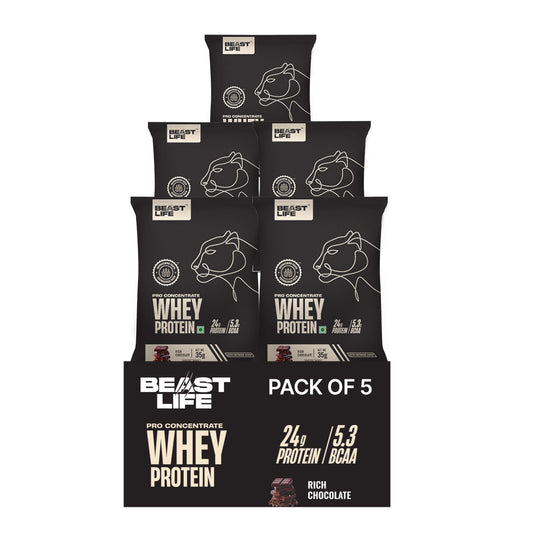
Pro Whey Protein | Rich Chocolate | Pack of 5 Sachets
Regular price ₹599Sale price ₹599 Regular priceUnit price per₹99940% OFFSave 40%Sale -
ROTI Protein Mix | ROTI 2.0 | 1 kg
3-5 roti per serving
Regular price ₹1,473Sale price ₹1,473 Regular priceUnit price per₹2,66944% OFFSave 44%Sale -
ROTI Protein Mix | ROTI 2.0 | 500 g
3-5 roti per serving
Regular price ₹1,052Sale price ₹1,052 Regular priceUnit price per₹1,60134% OFFSave 34%Sale -
Isorich Blend Whey Protein with Ultrasorb Tech | Vanilla | 924 g
Regular price ₹3,999Sale price ₹3,999 Regular priceUnit price per₹4,99920% OFFSave 20%Sale -
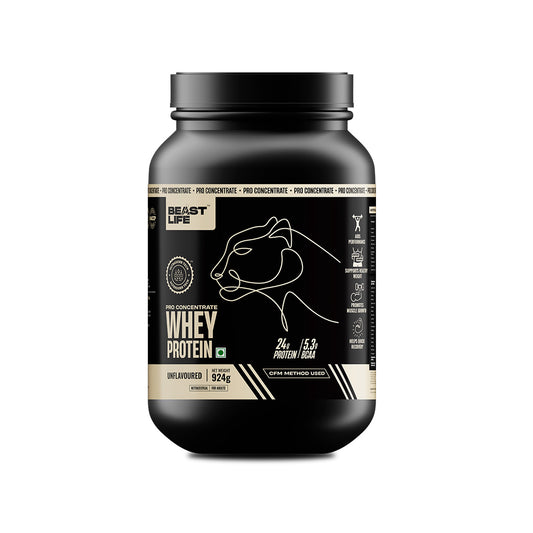
Pro Whey Protein with Ultrasorb Tech | Unflavoured | 924 g
Regular price ₹3,499Sale price ₹3,499 Regular priceUnit price per₹3,4990% OFFSave 0% -
Isorich Blend Whey Protein with Ultrasorb Tech | Chocolate | 924 g
Regular price ₹3,999Sale price ₹3,999 Regular priceUnit price per₹4,99920% OFFSave 20%Sold out -
Performance Fermented Yeast Protein with Ultrasorb Tech | Chocolate | 6 kg
Regular price ₹10,999Sale price ₹10,999 Regular priceUnit price per₹14,99926% OFFSave 26%Sale -
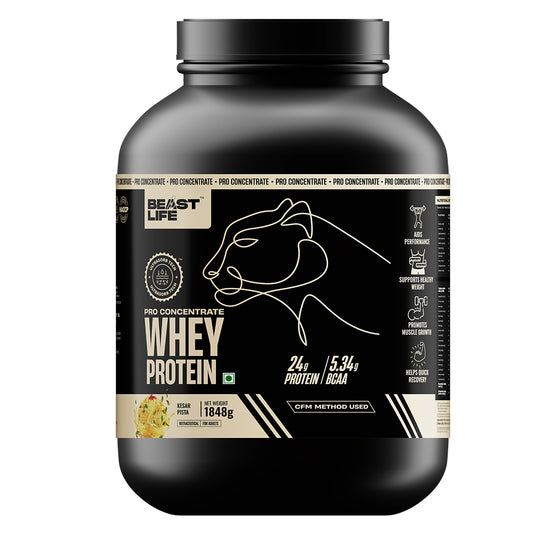 Sold outKesar Pista | 1.848 kg
Pro Concentrate Whey Protein with Ultrasorb Tech | Kesar Pista with Real Pista Flakes | 1.848 kg
Regular price ₹6,698Sale price ₹6,698 Regular priceUnit price per₹7,79814% OFFSave 14%Sold out -
The Pro Performance Stack
Regular price ₹8,297Sale price ₹8,297 Regular priceUnit price per₹11,13225% OFFSave 25%Sale -
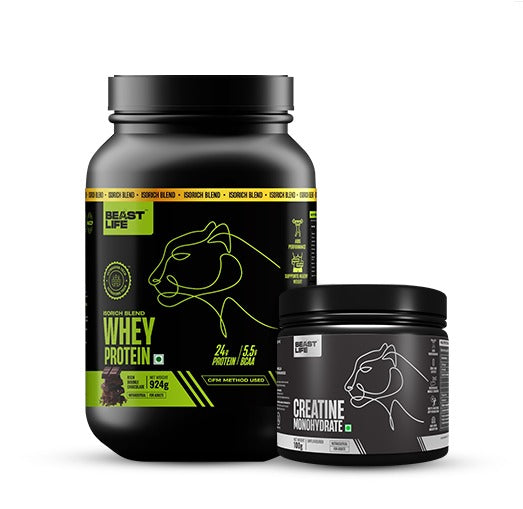 Sold out
The Extreme Power Combo
Regular price ₹4,448Sale price ₹4,448 Regular priceUnit price per₹5,66521% OFFSave 21%Sold out








Strong, Lean, and Fuelled Right: Whey Protein Built for Women Who Train
Here is something the fitness supplement industry rarely says clearly: whey protein is not a gendered product. It is derived from milk, it contains all nine essential amino acids, and it works the same way in every body that trains consistently. The persistent idea that whey protein for women leads to bulk or that it is "too strong" for female physiology is not supported by nutritional science. What differs between men and women is the hormonal environment that governs how muscle is built and how much of it is built. Understanding that difference is what helps women use whey protein effectively, rather than avoiding it based on outdated fitness myths.
The Bulking Myth: Setting the Record Straight
The single biggest misconception that keeps women from using protein supplements is the fear of looking too muscular. This fear is based on a misunderstanding of how muscle hypertrophy works.
Building large, visibly prominent muscle mass requires three things simultaneously: consistently high training volume, a meaningful caloric surplus sustained over months, and hormonal conditions that strongly favour muscle tissue growth. Women produce significantly less testosterone than men. According to research published in the Journal of Clinical Endocrinology and Metabolism, average female testosterone levels are approximately 15 to 20 times lower than average male levels. This physiological reality is why women who train regularly and eat adequate protein typically develop lean, defined muscle rather than large mass gains.
What Whey Protein Actually Does for Women Who Train
- Helps close the protein gap between what most diets provide and what active women actually need
- Supports lean muscle retention during fat loss phases, preserving metabolic rate
- Reduces muscle soreness and supports tissue repair between training sessions
- Provides a low-calorie, high-protein option that fits into calorie-conscious eating patterns
- Contributes to satiety, which supports appetite management throughout the day
How Much Protein Do Active Women Need?
The ISSN recommends 1.6 to 2.2g of protein per kilogram of body weight per day for active women with body composition or performance goals. A 60kg woman training four days a week would target 96 to 132g of total daily protein from all food sources combined.
Data from the 2020 Indian Market Research Bureau survey found that 73 percent of Indian diets are protein-deficient. Active women face a steeper challenge because training increases protein requirements at the same time that diet alone often falls short. This is the practical space where whey protein becomes genuinely useful.
How Goals Shape Daily Protein Targets
Muscle building and strength: 1.8 to 2.2g per kg daily. Post-workout consumption within one to two hours of resistance training is most strategically timed.
Fat loss while preserving lean muscle: 1.8 to 2.4g per kg daily. Higher protein intake during a caloric deficit reduces the risk of muscle loss, which directly supports long-term metabolic health.
General fitness and endurance: 1.4 to 1.8g per kg daily. Consistent intake distributed across meals matters more than precise timing at this level of activity.
One to two servings of whey protein per day alongside protein-rich meals is a practical approach for most active women at any of these training levels.
Choosing Between Whey Concentrate and Whey Isolate
The format you choose should reflect your current training goal and dietary requirements, not marketing language.
Whey Concentrate: For Women in a Muscle-Building or Performance Phase
Concentrate contains 70 to 80 percent protein per serving with naturally occurring fat and carbohydrates included. It is more calorie-dense, which suits women eating at or above maintenance calories to support strength or muscle goals.
Whey Isolate: For Women Managing Calories or With Lactose Sensitivity
Isolate undergoes additional filtration that removes most fat, lactose, and carbohydrates, resulting in 85 to 90 percent or more protein per serving at a lower calorie count. It is a practical option for women managing total calorie intake carefully or those who experience mild digestive discomfort with concentrated supplements.
The whey protein isolate 1kg range is a sensible starting point for women who want a high-purity, lower-calorie protein supplement that fits into a controlled nutrition plan.
What to Look for on a Whey Protein Label
Reading a supplement label takes two minutes and protects you from products that do not deliver what they claim. Here is what to check:
- Protein per serving: Look for at least 20 to 25g from whey protein fractions specifically, not from added cheap amino acids
- Sugar content: Keep added sugar below 3g per serving. Many "women's" protein products are sweetened products disguised as supplements
- FSSAI license number: Required for all supplements sold in India. Its absence is a compliance and authenticity concern
- No proprietary blends: Individual ingredient quantities should be visible on the label
- Calorie count aligned with your goal: A 200-calorie shake built around 20g of protein is not the same as a 130-calorie shake with 25g of protein
Avoid products that prominently list collagen protein or soy protein alongside whey. These dilute the product's amino acid profile and do not provide the same muscle-support properties as whey protein fractions.
Why BeastLife Does Not Make a "Women's" Version
BeastLife's whey protein range does not come in a pink tub with reduced protein per serving and added vitamins at a premium price. That is not a gap in the product line. It is intentional. Women who train seriously need quality protein at an effective dose, not a marketing repackage.
For women focused on lean muscle development or strength performance, the best whey protein for muscle gain collection includes options built around the amino acid profile and protein density that performance-focused women actually need.
The full beast whey protein range gives you both concentrate and isolate formats to compare based on your own calorie and protein targets.
Disclaimer: This content is for informational purposes only and does not constitute medical or nutritional advice. Consult a qualified healthcare professional before starting any supplement programme, particularly if you are pregnant, breastfeeding, or managing a health condition.
Frequently Asked Questions
Q1: Will whey protein cause me to gain fat?
Whey protein contributes calories to your daily intake. If total calorie consumption consistently exceeds your energy needs, weight gain can occur from any food source. Used within your daily targets, whey protein supports muscle development without contributing to unwanted fat gain.
Q2: Can I take whey protein if I am lactose intolerant?
Whey isolate is significantly lower in lactose than concentrate and is generally well-tolerated by those with mild sensitivity. If you have a clinically diagnosed dairy allergy, consult a healthcare professional before use.
Q3: What is the best time for women to take whey protein?
Post-workout within one to two hours of training is a well-supported approach. It can also be taken in the morning or between meals to help meet daily protein targets consistently.
Q4: Do women need a different protein supplement than men?
No. Protein requirements for muscle support and recovery are based on body weight and training intensity, not gender. Women-specific protein marketing is largely branding, not nutritional science.
Q5: Is whey protein safe to take every day?
For healthy adults, daily whey protein use within recommended serving sizes is generally considered safe. Excessive intake beyond what your training and diet require does not provide additional benefit.
Q6: Can whey protein help with weight management for women?
Adequate protein intake supports lean muscle retention, which in turn supports a healthy metabolic rate. Whey protein can be a convenient tool for meeting protein targets within a calorie-controlled diet, but it is not a weight loss supplement.


