
-
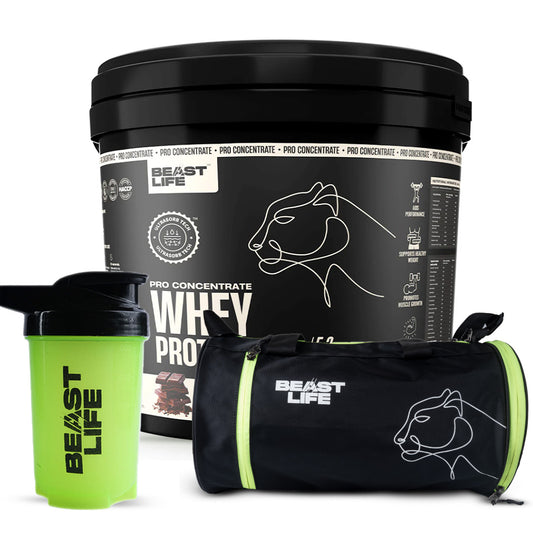 Rich Chocolate 3696g)
Pro Concentrate Whey Protein with Ultrasorb Tech | Rich Chocolate | Free Gym Bag and Shaker | 3.696 kg
Regular price ₹15,913Sale price ₹15,913 Regular priceUnit price per₹16,8945% OFFSave 5%Sale -
Pro Concentrate Whey Protein with Ultrasorb Tech | Butterscotch | 924 g
Regular price ₹3,949Sale price ₹3,949 Regular priceUnit price per₹3,9991% OFFSave 1%Sale -
 Cookies & Cream 3696g
Pro Concentrate Whey Protein with Ultrasorb Tech | Cookies & Cream | 3.696 kg
Regular price ₹14,999Sale price ₹14,999 Regular priceUnit price per₹23,99637% OFFSave 37%Sold out -
Pro Concentrate Whey Protein with Ultrasorb Tech | Cookies & Cream | 924 g
Regular price ₹3,949Sale price ₹3,949 Regular priceUnit price per₹3,9991% OFFSave 1%Sale -
Isorich Blend Whey Protein with Ultrasorb Tech | Chocolate | 1.848 kg
Regular price ₹9,749Sale price ₹9,749 Regular priceUnit price per₹9,7980% OFFSave 0%Sale -
Pro Concentrate Whey Protein with Ultrasorb Tech | Cookies & Cream | 1.848 kg
Regular price ₹7,749Sale price ₹7,749 Regular priceUnit price per₹11,99835% OFFSave 35%Sale -
Pro Concentrate Whey Protein with Ultrasorb Tech | Mango | 924 g
Regular price ₹3,949Sale price ₹3,949 Regular priceUnit price per₹5,99934% OFFSave 34%Sale -
 Fruit Punch | 105g
Combo pack | Preworkout | Fruit punch | 105 g + Creatine Monohydrate | Shikanji | 125 g + Neon Shaker | 500 ml
Regular price ₹1,104Sale price ₹1,104 Regular priceUnit price per₹2,05346% OFFSave 46%Sale


Beyond the Basics: How Advanced Whey Protein Supports the Serious Athlete
There is a point in every serious athlete's training life where a standard protein supplement stops being the right tool for the job. Not because standard products are low quality, but because higher training volume, more precise recovery requirements, and a more detailed understanding of nutrition mean that a more targeted product becomes a better investment. Advanced whey protein is designed for individuals who have moved past foundational supplementation and need a protein product that matches the specificity of their training programme. This guide is for athletes who already know why protein matters and want to understand how to use it at a higher level.
What "Advanced" Actually Means in a Supplement Context
The word "advanced" in supplement marketing can mean almost anything. For the purposes of this guide, an advanced whey protein product is one that:
- Delivers a higher protein percentage per serving than standard concentrate products (typically 85 percent or above)
- Provides full amino acid transparency, including BCAA fractions and leucine content per serving
- Contains no proprietary blends, fillers, or unverifiable ingredient quantities
- Has been independently tested for label accuracy and banned substance screening
- Is produced under documented quality control standards with FSSAI compliance
Advanced does not necessarily mean more expensive or more complicated. It means more precise and more transparent, which is what serious athletes require.
Who Should Be Using Advanced Whey Protein
Not every gym-goer needs an advanced protein product. Here is a practical framework for assessing where you sit:
You are ready for an advanced product if:
- You train four to six times per week with structured periodisation across building, strength, and conditioning phases
- You are tracking macronutrients and have a defined daily protein target that varies by training phase
- You have been training consistently for 12 months or more and have a solid foundation of technique and programme knowledge
- You are managing body composition with precision, either in a deliberate surplus or deficit, and need a product that fits tightly within your macronutrient budget
- You compete in sports or fitness disciplines where supplement certification (for banned substances) is relevant
A standard product is still appropriate if:
- You are in your first year of consistent training
- You are not yet tracking food intake or working with a structured programme
- You are primarily focused on establishing training habits rather than optimising nutritional variables
The Amino Acid Profile Difference in Advanced Products
At an advanced training level, the amino acid composition of your protein supplement matters more than it does for beginners. Specifically:
Leucine: As training volume and intensity increase, the threshold for triggering a sufficient muscle protein synthesis response may require closer attention. Look for at least 2.5 to 3g of leucine per serving in any product you select.
Total BCAA content: Branched-chain amino acids (leucine, isoleucine, and valine) collectively support muscle repair and reduce exercise-induced muscle damage. Advanced products typically deliver 5 to 7g of total BCAAs per 30g serving.
EAA completeness: All nine essential amino acids should be present and individually listed. This is not just about muscle gain; it is about ensuring that every protein serving contributes to full-spectrum recovery.
Explore the best whey protein for muscle gain collection for options that disclose full amino acid profiles suited to higher training demands.
Protein Timing at an Advanced Level
For beginners, total daily protein intake is the dominant variable. For advanced athletes, timing starts to play a more meaningful secondary role.
Pre-training protein:
Consuming 20 to 30g of protein 60 to 90 minutes before training ensures elevated amino acid availability during the session, which may reduce exercise-induced muscle breakdown and support performance in long or high-volume sessions.
Post-training protein:
The post-workout window remains important but is not as narrow as once believed. Within one to two hours of training is a practical and evidence-supported target. For twice-daily athletes, post-morning-session protein becomes a pre-afternoon-session delivery mechanism as well.
Overnight protein strategy:
Advanced athletes with high muscle gain targets sometimes add a slow-digesting protein source (casein) before sleep to support overnight muscle protein synthesis. This is a strategy that sits alongside whey protein supplementation rather than replacing it.
What Advanced Athletes Look for in a Whey Protein Label
At this level of training and nutritional awareness, the following are non-negotiable:
- Full amino acid profile per serving is listed on the label or available on request from the brand
- Third-party testing certification for banned substances is particularly relevant for competitive athletes
- Protein source transparency: whey protein isolate or hydrolysate is listed as the primary ingredient for advanced products
- FSSAI licensing and a verifiable manufacturing address
The beast whey protein range includes options suited to advanced supplementation needs, with full ingredient disclosure across all formats.
For athletes managing high-volume training across extended cycles, the whey protein isolate 1kg collection provides lean, high-purity protein suited to precise macro tracking without unwanted calorie contribution from fat or carbohydrate fillers.
Stacking Advanced Whey Protein With Other Performance Nutrients
Advanced athletes rarely use protein in isolation. Common evidence-based stacks include:
Whey protein and creatine monohydrate: Creatine supports ATP regeneration in high-intensity training. Combined with adequate protein, it supports both performance output and muscle recovery. There is no known negative interaction between the two.
Whey protein and fast-acting carbohydrates post-workout: Pairing a 25 to 30g protein serving with 40 to 60g of fast-digesting carbohydrates post-training supports simultaneous glycogen replenishment and protein synthesis.
Whey protein and electrolytes during high-sweat training: For athletes training in hot conditions or across long sessions, combining protein recovery with electrolyte replacement supports both hydration and muscle repair simultaneously.
For athletes in a caloric surplus using whey protein as part of a mass gain strategy, the whey protein for weight gain collection provides supplementation options relevant to higher-calorie training phases.
Disclaimer: This content is for informational purposes only and does not constitute medical or sports nutritional advice. Consult a qualified professional before modifying your supplementation programme.
Frequently Asked Questions
Q1: What is the difference between advanced whey protein and standard concentrate?
Advanced products typically use isolate or hydrolysate as primary ingredients, providing higher protein purity per serving with full amino acid disclosure. Standard concentrate is a quality product, but at a lower protein percentage with slightly more fat and carbohydrate per serving.
Q2: Does an advanced product mean a higher dose per day?
Not necessarily. Dosage is still based on body weight and total daily protein targets. Advanced products often allow you to hit the same protein target in fewer or smaller servings due to higher purity per gram.
Q3: Is hydrolysate always better than isolate for advanced athletes?
Hydrolysate absorbs faster but costs more. For most advanced athletes, isolate provides sufficient quality for training goals. Hydrolysate is most relevant for twice-daily training schedules or post-competition recovery where rapid amino acid delivery is a priority.
Q4: Can advanced whey protein be taken by beginners?
Yes, but it is typically unnecessary. Beginners benefit from standard concentrate at a lower cost. Investing in advanced products makes more sense once training volume, programme structure, and nutritional precision justify the higher cost per serving.
Q5: Should competitive athletes prioritise third-party tested products?
Yes. Athletes subject to doping controls in their sport should only use products with a recognised banned substance screening certification, such as Informed Sport or equivalent.
Q6: How often should advanced athletes reassess their protein strategy?
At the start of each new training block or phase (every eight to twelve weeks), reviewing your protein target, product type, and timing strategy relative to your current goal is a practical habit for optimising supplement use over time.