
-
 Sold outTropical Tango | 305G
World’s First Creatine Nano 400 | Finest & Fastest Absorbing | 2X Strength | Tropical Tango | 305G
Regular price ₹1,199Sale price ₹1,199 Regular priceUnit price per₹1,99940% OFFSave 40%Sold out -
Creatine Monohydrate | Litchi | 319 g
Regular price ₹699Sale price ₹699 Regular priceUnit price per₹1,42250% OFFSave 50%Sold out -
 Sold outBlueberry | 305G
World’s First Creatine Nano 400 | Finest & Fastest Absorbing | 2X Strength| Blueberry | 305G
Regular price ₹1,199Sale price ₹1,199 Regular priceUnit price per₹1,99940% OFFSave 40%Sold out -
 Sold outPeach | 500g
Valentine’s Limited Couple Combo | Plastic Shaker Red 500 ml + Creatine Monohydrate Peach 500 g
Regular price ₹1,698Sale price ₹1,698 Regular priceUnit price per₹1,99915% OFFSave 15%Sold out -
Creatine Monohydrate | Peach | 500 g
Regular price ₹1,199Sale price ₹1,199 Regular priceUnit price per₹1,99940% OFFSave 40%Sold out -
Creatine Monohydrate | Litchi | 125 g
Regular price ₹499Sale price ₹499 Regular priceUnit price per₹75533% OFFSave 33%Sold out -
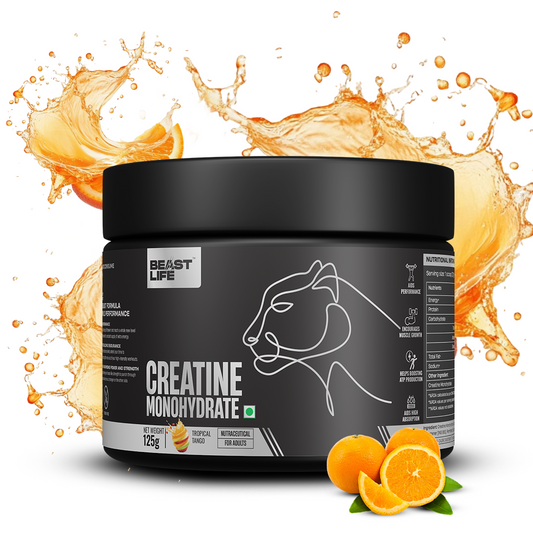
Creatine Monohydrate | Tropical Tango | 125 g
Regular price ₹499Sale price ₹499 Regular priceUnit price per₹75533% OFFSave 33%Sale -
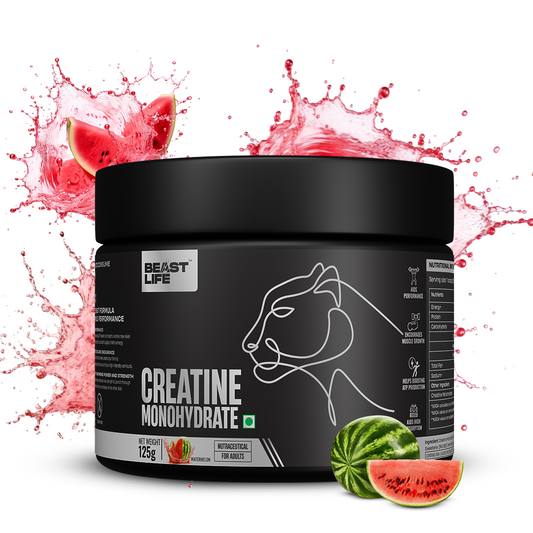
Creatine Monohydrate | Watermelon | 125 g
Regular price ₹499Sale price ₹499 Regular priceUnit price per₹75533% OFFSave 33%Sold out -
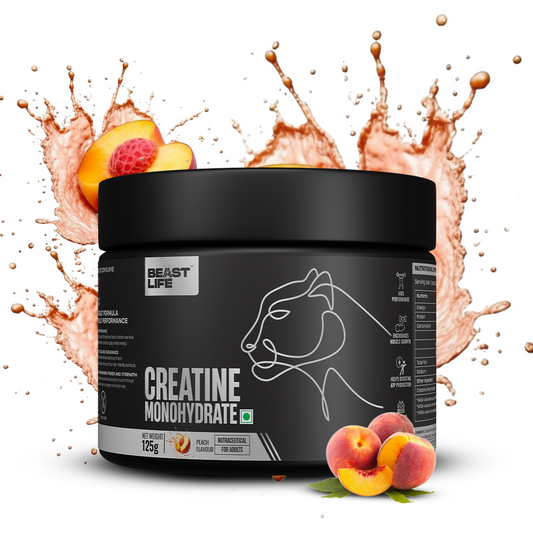
Creatine Monohydrate | Peach | 125 g
Regular price ₹499Sale price ₹499 Regular priceUnit price per₹75533% OFFSave 33%Sale -
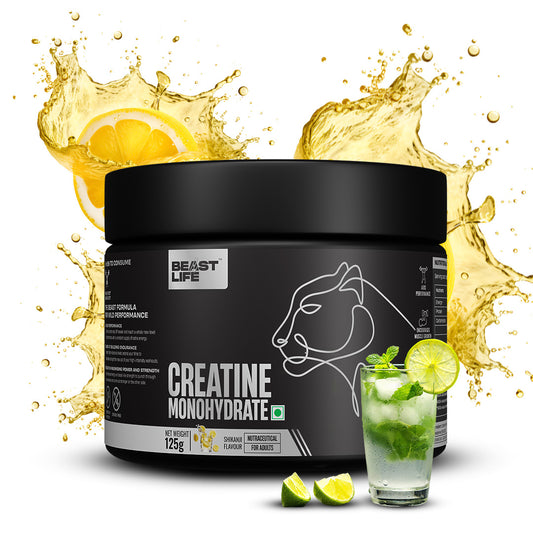
Creatine Monohydrate | Shikanji | 125 g
Regular price ₹499Sale price ₹499 Regular priceUnit price per₹75533% OFFSave 33%Sold out -
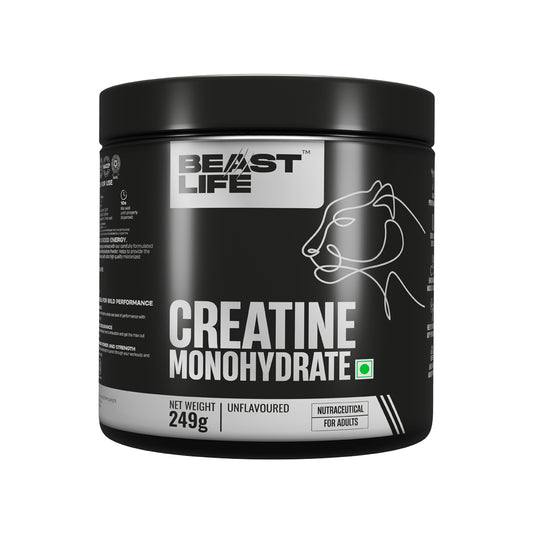
Super Micronized Creatine Monohydrate | 249G
Regular price ₹599Sale price ₹599 Regular priceUnit price per₹1,33455% OFFSave 55%Sale -
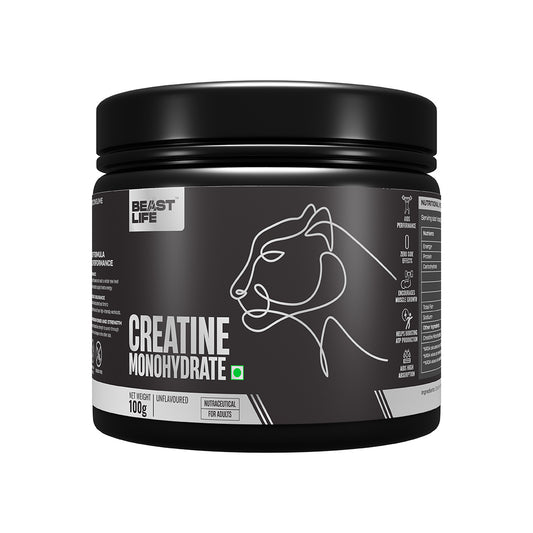
Super Micronized Creatine Monohydrate | 100G
Regular price ₹449Sale price ₹449 Regular priceUnit price per₹66632% OFFSave 32%Sale -
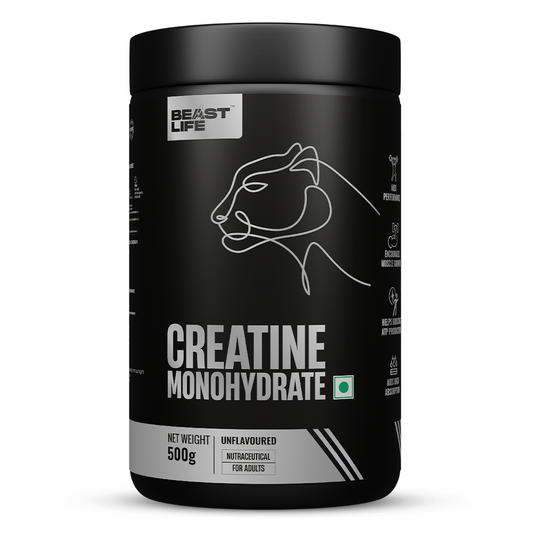
Super Micronized Creatine Monohydrate | 500 g
Regular price ₹1,049Sale price ₹1,049 Regular priceUnit price per₹1,79941% OFFSave 41%Sale -
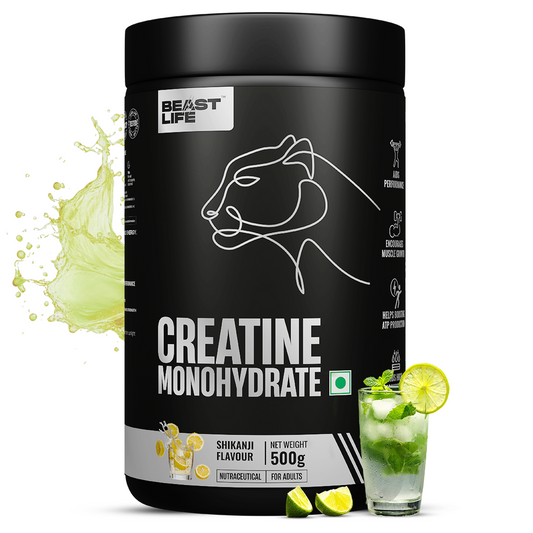
Creatine Monohydrate | Shikanji | 500 g
Regular price ₹1,199Sale price ₹1,199 Regular priceUnit price per₹1,99940% OFFSave 40%Sale -
 Tropical Tango | 500g
Valentine’s Limited Couple Combo | Bold Shaker Red 500 ml + Creatine Monohydrate Tropical Tango 500 g
Regular price ₹1,698Sale price ₹1,698 Regular priceUnit price per₹1,99915% OFFSave 15%Sale -
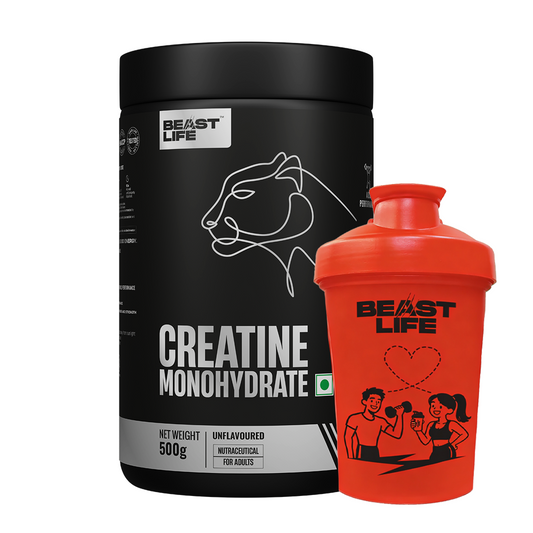 Unflavoured | 500g
Valentine’s Limited Couple Combo | Plastic Shaker Red 500 ml + Creatine Monohydrate Unflavoured 500 g
Regular price ₹1,548Sale price ₹1,548 Regular priceUnit price per₹1,79913% OFFSave 13%Sale -
 Shikanji | 500g
Valentine’s Limited Couple Combo | Plastic Shaker Red 500 ml + Creatine Monohydrate Shikanji 500 g
Regular price ₹1,698Sale price ₹1,698 Regular priceUnit price per₹1,99915% OFFSave 15%Sale -
Creatine Monohydrate | Tropical Tango | 500 g
Regular price ₹1,199Sale price ₹1,199 Regular priceUnit price per₹1,99940% OFFSave 40%Sale -
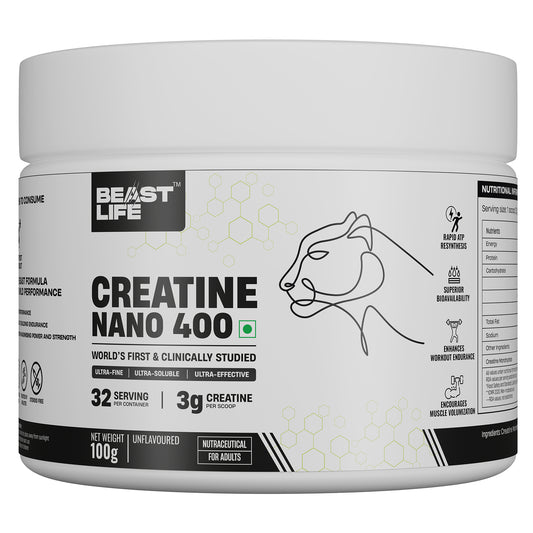 Unflavoured | 100G
World’s First Creatine Nano 400 | Finest & Fastest Absorbing | 2X Strength | 100G | Unflavoured
Regular price ₹599Sale price ₹599 Regular priceUnit price per₹89933% OFFSave 33%Sale -
 Nano + Performance Protein
Combo pack | Creatine Nano 400 | Unflavoured | 100 g + Performance Protein | Cold Coffee | 1 kg
Regular price ₹2,998Sale price ₹2,998 Regular priceUnit price per₹3,89823% OFFSave 23%Sale -
 Nano + Isorich
Combo pack | Creatine Nano 400 | Unflavoured | 100 g + Isorich Blend whey protein | Rich Double Chocolate | 924 g
Regular price ₹4,698Sale price ₹4,698 Regular priceUnit price per₹5,89820% OFFSave 20%Sold out -
 Nano + Whey Protein
Combo pack | Creatine Nano 400 | Unflavoured | 100 g + Pro concentrate whey protein | Rich chocolate | 924 g
Regular price ₹4,198Sale price ₹4,198 Regular priceUnit price per₹4,89814% OFFSave 14%Sale -
 Nano + Performance Protein
Combo pack | Creatine Nano 400 | Unflavoured | 100 g + Performance Protein | Chocolate | 1 kg
Regular price ₹2,998Sale price ₹2,998 Regular priceUnit price per₹3,56815% OFFSave 15%Sale -
 Nano + Mass Gainer
Combo pack | Creatine Nano 400 | Unflavoured | 100 g + Anabolic Mass Gainer | Belgian Chocolate | 1 kg
Regular price ₹1,898Sale price ₹1,898 Regular priceUnit price per₹2,67829% OFF29% OFFSale -
 Assorted Pack of 3
World’s First Creatine Nano 400 | Assorted Pack of 3 | Finest & Fastest Absorbing | 2X Strength | Beast Size (305g Each)
Regular price ₹4,497Sale price ₹4,497 Regular priceUnit price per₹5,99725% OFFSave 25%Sold out -
 Nano + Performance Protein
Combo pack | Creatine Nano 400 | Shikanji | 305 g + Performance Protein | Chocolate | 2 kg
Regular price ₹5,897Sale price ₹5,897 Regular priceUnit price per₹7,19818% OFFSave 18%Sold out -
 Nano + Whey Protein
Combo pack | Creatine Nano 400 | Shikanji | 305 g + Pro concentrate whey protein | Rich chocolate | 1.848 kg
Regular price ₹8,197Sale price ₹8,197 Regular priceUnit price per₹9,79716% OFFSave 16%Sold out -
 Nano + Mass Gainer
Combo pack | Creatine Nano 400 | Shikanji | 305 g + Anabolic Mass Gainer | Belgian Chocolate | 2.5 kg
Regular price ₹3,798Sale price ₹3,798 Regular priceUnit price per₹5,91335% OFF35% OFFSold out -
Creatine Monohydrate | Litchi | 500 g
Regular price ₹1,199Sale price ₹1,199 Regular priceUnit price per₹1,99940% OFFSave 40%Sold out -
Creatine Monohydrate | Watermelon | 319 g
Regular price ₹699Sale price ₹699 Regular priceUnit price per₹1,42350% OFFSave 50%Sold out -
 Sold outNano + Performance Protein
Combo pack | Creatine Nano 400 | Shikanji | 115 g + Performance Protein | Cold Coffee | 1 kg
Regular price ₹2,998Sale price ₹2,998 Regular priceUnit price per₹3,89823% OFFSave 23%Sold out -
 Sold outNano + Mass Gainer
Combo pack | Creatine Nano 400 | Shikanji | 115 g + Anabolic Mass Gainer | Belgian Chocolate | 1 kg
Regular price ₹1,898Sale price ₹1,898 Regular priceUnit price per₹2,67829% OFF29% OFFSold out -
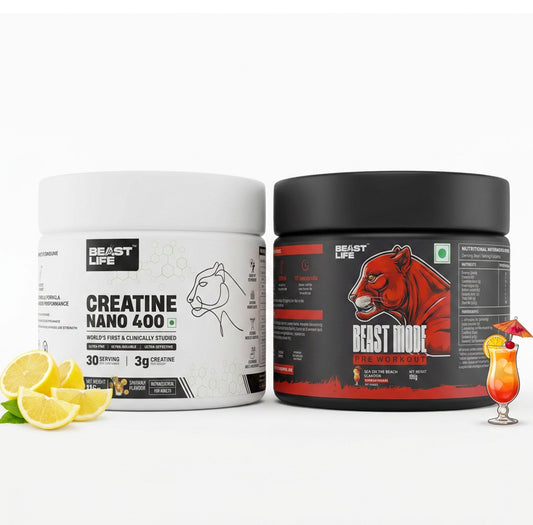 Nano + Preworkout
Combo pack | Creatine Nano 400 | Shikanji | 115 g + Preworkout | Sex On The Beach | 105 g
Regular price ₹1,224Sale price ₹1,224 Regular priceUnit price per₹1,69827% OFFSave 27%Sold out -
 Nano + Isorich
Combo pack | Creatine Nano 400 | Shikanji | 115 g + Isorich blend whey protein | Rich Double Chocolate | 924 g
Regular price ₹4,698Sale price ₹4,698 Regular priceUnit price per₹5,89820% OFFSave 20%Sold out -
 Sold outNano + Whey Protein
Combo pack | Creatine Nano 400 | Shikanji | 115 g + Pro Conc. whey protein | Rich chocolate | 924 g
Regular price ₹4,198Sale price ₹4,198 Regular priceUnit price per₹4,89814% OFFSave 14%Sold out -
 Nano + Performance Protein
Combo pack | Creatine Nano 400 | Shikanji | 115 g + Performance Protein | Chocolate | 1 kg
Regular price ₹2,998Sale price ₹2,998 Regular priceUnit price per₹3,56815% OFFSave 15%Sold out -
 Sold outShikanji | 115G
World’s First Creatine Nano 400 | Finest & Fastest Absorbing | 2X Strength | Shikanji | 115G
Regular price ₹599Sale price ₹599 Regular priceUnit price per₹89933% OFFSave 33%Sold out -
 Sold outTropical Tango | 115G
World’s First Creatine Nano 400 | Finest & Fastest Absorbing | 2X Strength | Tropical Tango | 115G
Regular price ₹599Sale price ₹599 Regular priceUnit price per₹89933% OFFSave 33%Sold out -
Creatine Monohydrate | Peach | 319 g
Regular price ₹699Sale price ₹699 Regular priceUnit price per₹1,42350% OFFSave 50%Sale -
Creatine Monohydrate | Watermelon | 500 g
Regular price ₹1,199Sale price ₹1,199 Regular priceUnit price per₹1,99940% OFFSave 40%Sold out -
 Sold outLitchi | 500g
Valentine’s Limited Couple Combo | Plastic Shaker Red 500 ml + Creatine Monohydrate Litchi 500 g
Regular price ₹1,698Sale price ₹1,698 Regular priceUnit price per₹1,99915% OFFSave 15%Sold out -

Valentine’s Limited Couple Combo | Plastic Shaker Red 500 ml + Creatine Monohydrate Watermelon 500 g
Sold outWatermelon | 500gValentine’s Limited Couple Combo | Plastic Shaker Red 500 ml + Creatine Monohydrate Watermelon 500 g
Regular price ₹1,698Sale price ₹1,698 Regular priceUnit price per₹1,99915% OFFSave 15%Sold out -
 Sold outBlueberry | 115G
World’s First Creatine Nano 400 | Finest & Fastest Absorbing | 2X Strength | Blueberry | 115G
Regular price ₹599Sale price ₹599 Regular priceUnit price per₹89933% OFFSave 33%Sold out -
 Nano + Whey Protein
Combo pack | Creatine Nano 400 | Unflavoured | 250 g + Pro concentrate whey protein | Rich chocolate | 1.848 kg
Regular price ₹8,197Sale price ₹8,197 Regular priceUnit price per₹9,79716% OFFSave 16%Sold out -
 Assorted Pack of 3
World’s First Creatine Nano 400| Assorted Pack of 3 | Finest & Fastest Absorbing | 2X Strength | King Size (115g Each)
Regular price ₹2,097Sale price ₹2,097 Regular priceUnit price per₹2,69722% OFFSave 22%Sold out -
 Sold outNano + Performance Protein
Combo pack | Creatine Nano 400 | Unflavoured | 250 g + Performance Protein | Chocolate | 2 kg
Regular price ₹5,897Sale price ₹5,897 Regular priceUnit price per₹7,19818% OFFSave 18%Sold out -
 Nano + Isorich
Combo pack | Creatine Nano 400 | Shikanji | 305 g + Isorich Blend whey protein | Rich Double chocolate | 1.848 kg
Regular price ₹9,197Sale price ₹9,197 Regular priceUnit price per₹11,79722% OFFSave 22%Sold out -
 Nano + Preworkout
Combo pack | Creatine Nano 400 | Tropical Tango | 115 g + Preworkout | Fruit punch | 105 g
Regular price ₹1,198Sale price ₹1,198 Regular priceUnit price per₹1,69829% OFFSave 29%Sold out




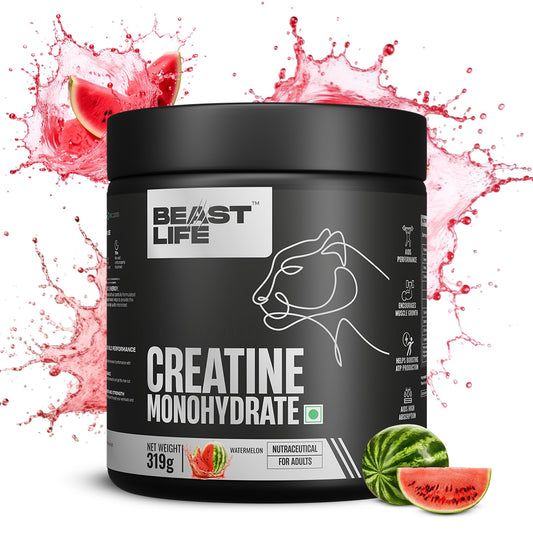


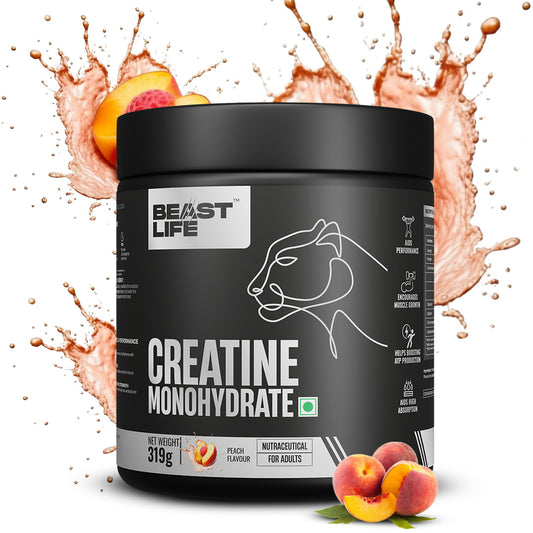


The Gold Standard, Justified: Why Creatine Monohydrate Still Leads the Field
In an industry that continuously generates new "advanced" and "next generation" supplement claims, creatine monohydrate has done something remarkable: it has maintained its position as the most recommended creatine form for over three decades while the products claiming to replace it have come and gone. The best creatine monohydrate is not merely a label. It is a category defined by one of the most consistent and replicated bodies of research in all of sports nutrition science. This guide builds from the cellular level upward, starting with the biological mechanism that makes creatine monohydrate effective, progressing through the evidence hierarchy, and finishing with the specific criteria to evaluate any product claiming this standard.
The Cellular Mechanism: How Creatine Monohydrate Works at the Molecular Level
ATP, Phosphocreatine, and the Energy System Under Pressure
Every muscle contraction requires adenosine triphosphate (ATP). During explosive, high-intensity efforts such as a maximal squat set or a sprint, the demand for ATP exceeds the rate at which aerobic metabolism can produce it. The phosphocreatine system fills this critical gap.
Phosphocreatine (PCr), stored in muscle cells, donates a phosphate group to adenosine diphosphate (ADP) to regenerate ATP in fractions of a second. This is the dominant energy pathway for activities lasting two to ten seconds at maximum intensity. It is the reason two additional repetitions are achievable at a training weight that previously caused failure at the same rep count. It is the reason set-to-set recovery feels meaningfully faster.
What Creatine Monohydrate Supplementation Changes
By supplementing with creatine monohydrate at 3 to 5g daily, muscle creatine stores increase by approximately 20 to 40 percent above the ceiling achievable through diet and natural synthesis alone. This expanded creatine pool delivers:
- More phosphocreatine is available per high-intensity effort
- Faster phosphocreatine resynthesis between efforts within a session
- Greater total training volume is achievable at intensity
- Over time, more progressive overload, which is the primary driver of muscle hypertrophy
What the Research Confirms: The Evidence Hierarchy
Tier 1: Systematic Reviews and Meta-Analyses
A meta-analysis published in the Journal of Strength and Conditioning Research covering 22 studies found creatine monohydrate supplementation increased maximum strength by an average of 8 percent and repetitions to muscular failure by 14 percent compared to placebo in resistance-trained subjects.
Tier 2: ISSN Position Statements
The International Society of Sports Nutrition's position statement on creatine supplementation identifies creatine monohydrate as the most effective ergogenic nutritional supplement currently available for increasing high-intensity exercise capacity and lean body mass in conjunction with training.
Tier 3: Long-Term Safety Data
Studies extending up to five years of continuous creatine monohydrate supplementation have not identified safety concerns in healthy adult populations. Research has been conducted across age ranges from adolescent athletes to elderly adults with consistent findings of improved muscle function and lean mass maintenance.
No other commercially available creatine form has a comparable depth of research. This is the central and unambiguous justification for creatine monohydrate's continued status as the recommended choice.
How to Identify the Best Creatine Monohydrate Product
Purity Standards
Quality creatine monohydrate products use pharmaceutical-grade or equivalent creatine with purity at or above 99.9 percent. Creapure, manufactured in Germany by AlzChem, is the most widely recognised branded creatine monohydrate source with a documented purity standard of 99.99 percent and consistent independent testing records. Products using Creapure as their creatine source display the Creapure certification mark and can be verified through the Creapure website.
Non-branded creatine monohydrate can be equally high quality but requires additional verification through FSSAI compliance, third-party testing, and transparent labelling to establish confidence in purity claims.
Label Requirements for the Best Creatine Monohydrate
- Creatine monohydrate is listed as the sole or primary active ingredient
- Clearly stated creatine content per serving (3 to 5g per serving for standard dosing)
- No proprietary blends obscuring actual creatine content
- FSSAI license number on the packaging
- Third-party testing certification, where available
What to Avoid
- Products listing "creatine complex" or "creatine matrix" without specifying forms and quantities
- Products with multiple fillers listed alongside creatine in a simple, standalone creatine supplement
- Supplements claiming creatine content far above the standard 3 to 5g effective dose without scientific justification
For athletes stacking creatine monohydrate with post-workout protein, the best whey protein for muscle gain collection provides whey protein options suited to combining with creatine maintenance dosing for comprehensive post-workout nutrition.
Dosing Protocols for Best Creatine Monohydrate
Standard Maintenance Protocol
3 to 5g of creatine monohydrate per day taken consistently. Muscle saturation occurs within three to four weeks. The ISSN recommends this as the most practical long-term protocol for most athletes due to consistent compliance and absence of loading-associated digestive discomfort.
Loading Protocol
20g per day split into four 5g doses for five to seven consecutive days, followed by 3 to 5g daily maintenance. Achieves full muscle saturation in approximately one week. Both protocols reach the same endpoint. The loading phase accelerates the timeline only.
Cycling
Current research does not support mandatory cycling periods. Continuous daily supplementation at maintenance doses is safe and maintains consistent muscle creatine stores without requiring periodic washout phases.
For athletes who also want a leaner protein source to pair with their creatine post-workout without adding excess calories, the whey protein isolate 1kg collection provides a high-purity, lower-calorie option compatible with a creatine maintenance protocol.
Frequently Asked Questions
Q1: Why is creatine monohydrate still considered the best creatine form after 30 years?
It holds the largest and most consistent body of evidence supporting its efficacy and safety. Competing forms have not demonstrated superior outcomes in rigorous comparative studies, while creatine monohydrate continues to accumulate supporting research.
Q2: What is the difference between Creapure and generic creatine monohydrate?
Creapure is a branded, German-manufactured creatine monohydrate with documented purity at 99.99 percent and consistent third-party testing. Generic creatine monohydrate can be equally pure but requires independent purity verification.
Q3: Does the best creatine monohydrate require a loading phase?
No. Loading is optional. It accelerates muscle saturation from approximately four weeks to one week. Both approaches achieve the same saturation endpoint with equivalent long-term performance outcomes.
Q4: Can creatine monohydrate be taken with food?
Yes. It can be taken with food, water, or mixed into a protein shake. Taking it with a carbohydrate-containing meal or post-workout shake may marginally improve uptake via insulin-mediated transport, but daily consistency matters more than precise timing.
Q5: Is creatine monohydrate safe for athletes subject to drug testing?
Creatine is not a prohibited substance in any major sport. Athletes in tested disciplines should use products with third-party testing certification to verify no contamination from manufacturing.
Q6: How long does it take to notice the effects of the best creatine monohydrate?
With a loading phase, improved training capacity may be noticeable within one to two weeks. Without loading, effects typically become apparent after three to four weeks of consistent daily supplementation when stores are fully saturated.


