Best Time to Take Protein Powder

You may have been told to drink a shake within 30 minutes of your last rep, and you have probably sprinted out of the gym to do it. What most lifters miss is that research now shows total daily protein matters more than the stopwatch. In this guide, we'll explain the best time to take protein powder for each goal and what actually moves your results.
Overview
-
Protein powder works best at whatever time helps you hit your daily protein target consistently.
-
A meta-analysis found that protein timing effects on muscle growth disappeared once total daily protein was matched.
-
The post-workout "anabolic window" is likely several hours long, not 30 minutes.
-
Roughly 0.4 g of protein per kg per meal across at least four meals is a practical distribution.
-
40 g of casein before sleep increased overnight muscle protein synthesis in trained men.
-
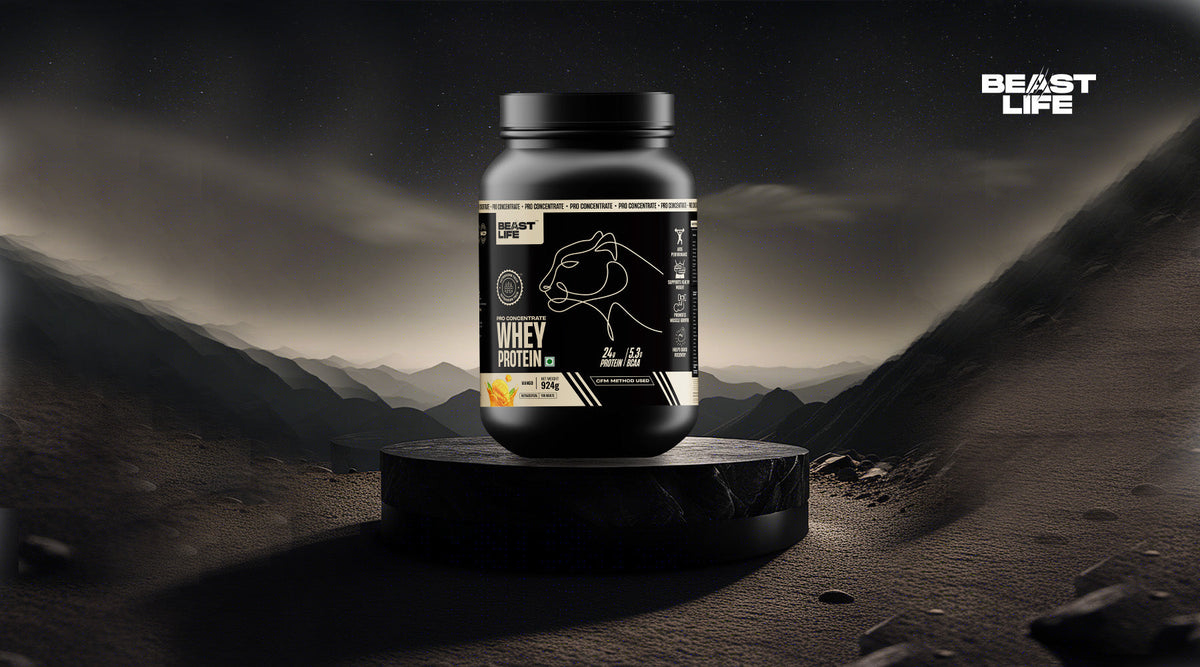
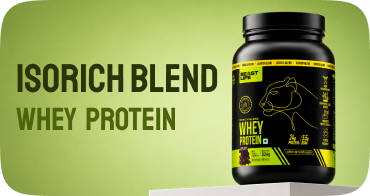
BeastLife Pro Concentrate Whey Protein and BeastLife Isorich Blend Whey Protein each deliver 24 g of protein per scoop, suited to post-workout, morning or between-meal use.
-
Consistency beats precision.
What Is the Best Time to Take Protein Powder?
The best time to take protein powder is whenever it helps you reach your daily protein goal, ideally spread across three to five meals. A meta-analysis found that the apparent benefit of protein timing disappeared once total daily protein was controlled. Source: Schoenfeld, Aragon & Krieger, Journal of the International Society of Sports Nutrition, 2013. In plain terms, eating enough protein matters more than the exact minute you drink it. Timing becomes a fine-tuning tool, not the foundation.
Why Protein Timing Matters
Protein timing matters mainly for convenience, distribution and fasted training. Muscle building benefits from a steady supply of amino acids, and researchers suggest about 0.4 g of protein per kg per meal across at least four meals to reach roughly 1.6 g/kg daily. Source: Schoenfeld & Aragon, Journal of the International Society of Sports Nutrition, 2018. That is also the point where benefits level off. Source: Morton et al., British Journal of Sports Medicine, 2018.
For a 70 kg lifter, that is about 28 g per meal. BeastLife Pro Concentrate Whey Protein (24 g protein, 5.34 g BCAAs, zero added sugar) and BeastLife Isorich Blend Whey Protein (24 g protein, 5.5 g BCAAs, four-ingredient label) each cover most of a meal's target in one scoop. Both are NABL lab-tested, with Ultrasorb Tech™ for a lighter shake.
Best Time to Take Protein Powder by Goal
For Muscle Gain
For muscle gain, take protein within a few hours before or after training and spread the rest across the day. The post-exercise anabolic window is likely several hours long, and it narrows if you trained fasted. Source: Aragon & Schoenfeld, Journal of the International Society of Sports Nutrition, 2013. So if you lift at 6 AM without breakfast, drink your shake soon after. If you ate a protein meal two hours earlier, there is no need to panic.
For Fat Loss
For fat loss, take protein at breakfast or between meals to stay full. Protein has a higher thermic effect than carbohydrate or fat, with about 20-30% of its calories spent on digestion. Source: Halton & Hu, Journal of the American College of Nutrition, 2004. A shake in cold water keeps calories low, and it replaces snacking on biscuits and chai-time namkeen.
For Recovery Overnight
For overnight recovery, a slower-digesting protein before bed helps. Trained men who took 40 g of casein before sleep showed higher overnight muscle protein synthesis than placebo. Source: Res et al., Medicine & Science in Sports & Exercise, 2012. BeastLife Isorich Blend Whey Protein mixed with milk digests more slowly than with water, making it a practical pre-bed option.
Common Protein Timing Myths
Protein timing myths are persistent claims that sound scientific but fall apart under evidence. Here are the main ones:
-
"You must drink protein within 30 minutes." The window is far wider, and total daily intake matters more.
-
"Night protein makes you fat." Weight change depends on total calories, not the clock.
-
"More protein always means more muscle." Gains plateau near 1.6 g/kg per day.
-
"Plant protein is inferior." Pea protein matched whey for muscle thickness in a 12-week trial. Source: Babault et al., 2015.
Tools and Practical Application: A Simple Daily Protein Schedule
A daily protein schedule is a plan that places four protein hits across your day. A sample for a 70 kg lifter: breakfast (eggs or paneer, about 25 g), lunch (dal, rajma or chicken, about 30 g), post-workout (one scoop with water, 24 g) and dinner (about 30 g). Use water for faster absorption after training and milk when you want extra calories or slower release.
Set Your Own Timing
Your next step is to anchor your shake to a fixed moment, such as straight after training or with breakfast, and then stick to it for four weeks. Log your total protein for a week to confirm you are reaching 1.6 g/kg. If bloating is a worry, begin with half a scoop to test tolerance.
Conclusion
The best time to take protein powder is the time you will actually take it, as part of a day that hits your protein target. Skip the stopwatch, build the habit, and let consistency do the lifting. Fuel the discipline.