-
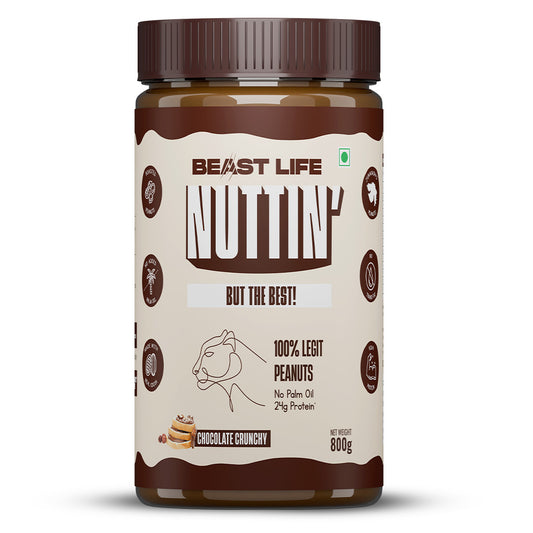
Chocolate Crunchy | 800gmNatural Peanut Butter | Chocolate Crunchy | 100% Peanut, No Palm Oil | 800 g
Regular price ₹349Sale price ₹349 Regular priceUnit price per₹57839% OFFSave 39%Sale -
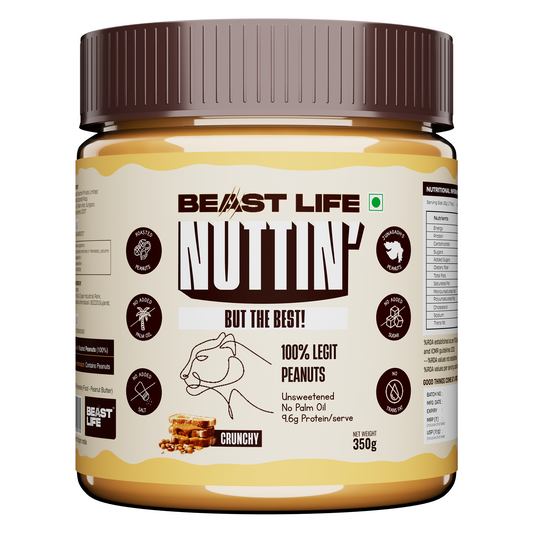
Natural Peanut Butter | Crunchy | 100% Peanuts | No Palm Oil | 350 g
Regular price ₹149Sale price ₹149 Regular priceUnit price per₹22232% OFFSave 32%Sale -
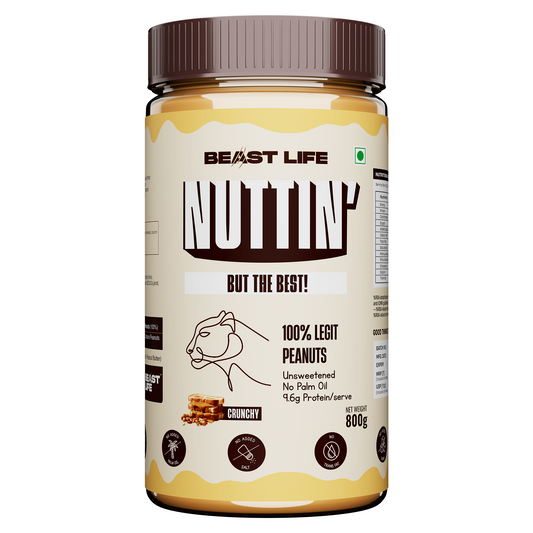
Natural Peanut Butter | Crunchy | 100% Peanuts | No Palm Oil | 800 g
Regular price ₹339Sale price ₹339 Regular priceUnit price per₹48930% OFFSave 30%Sale -
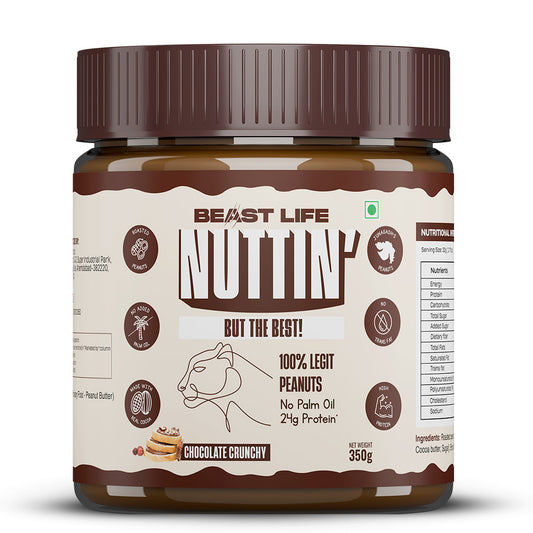
Chocolate Crunchy | 350gmNatural Peanut Butter | Chocolate Crunchy | 100% Peanut, No Palm Oil | 350 g
Regular price ₹149Sale price ₹149 Regular priceUnit price per₹31152% OFFSave 52%Sale
Whey Protein Peanut Butter: The High-Protein Spread That Earns Its Place in Your Diet
Most people treat peanut butter as a guilty pleasure sitting somewhere between a snack and a condiment. What they are less aware of is that a well-formulated peanut butter, made from quality peanuts with no added palm oil, no hydrogenated fats, and no unnecessary sweeteners, is one of the most nutritionally dense whole foods available for regular consumption. Add whey protein to that base, and you have a product that delivers protein from two distinct sources, sustained energy from natural fats, and a flavour that actually encourages people to stick to their nutrition plan.
BeastLife's whey protein peanut butter range is built on 100 percent Junagadh peanuts sourced from Gujarat, known for their natural richness, oil content, and clean flavour. Every variant is free of palm oil, free of artificial preservatives, and carries no hydrogenated fats. This is not a supplement dressed up as food. It is food that happens to be optimised for people who train.
What Is Whey Protein Peanut Butter and How Does It Differ from Regular Peanut Butter?
Standard commercial peanut butter in India typically contains peanuts, sugar, hydrogenated vegetable oil (usually palm oil), and salt. The hydrogenated oil is added to prevent natural oil separation and extend shelf life. It also adds trans fats, which are associated with cardiovascular risk and are specifically listed to avoid in every clinical dietary guideline worldwide.
Natural peanut butter contains only ground peanuts, sometimes with a small amount of salt. You will see oil separation at the top of the jar, which is the natural peanut oil rising to the surface. This is a sign of an unprocessed product, not a quality defect.
Whey protein peanut butter takes a natural peanut base and incorporates whey protein into the formulation, increasing the total protein content per serving beyond what peanuts alone provide. The result is a spread that delivers protein from two complementary sources: the slower-digesting plant-based protein from peanuts, and the fast-absorbing complete protein from whey. This dual-protein combination makes it a more effective post-workout or between-meal food than standard peanut butter or plain whey protein could provide individually.
BeastLife's Whey Protein Peanut Butter Range
Natural Peanut Butter: Crunchy (350 g and 800 g)
Made from 100 percent Junagadh peanuts with no palm oil and no artificial additives. The crunchy variant retains peanut pieces through the grinding process, providing texture alongside the nutritional profile. With 104 reviews at 4.85 out of 5 at the 350 g size and 63 reviews at 4.84 at the 800 g size, this is BeastLife's most consistently rated peanut butter product across variants.
At 149 rupees for 350 g (down from 222) and 339 rupees for 800 g (down from 489), this is one of the most price-accessible natural peanut butters in the Indian market from a brand with verifiable quality standards.
Natural Peanut Butter: Chocolate Crunchy (350 g and 800 g)
The same Junagadh peanut base as the standard crunchy variant, with real cocoa integrated into the formulation to produce a chocolate peanut butter that tastes genuinely like both ingredients rather than one masking the other. With 108 reviews at 4.82 at the 350 g size and 46 reviews at 4.91 at the 800 g size, the Chocolate Crunchy 800 g is the highest-rated product in the BeastLife peanut butter range.
At 149 rupees for 350 g (down from 311, a 52 percent discount) and 349 rupees for 800 g (down from 578), the value proposition is particularly strong at current pricing.
What Junagadh Peanuts Bring to the Formulation
Junagadh in Gujarat is one of India's most significant peanut-producing regions, with a climate and soil profile that produces peanuts with naturally high oil content, a richer flavour than commodity peanuts from other regions, and consistent quality across harvest cycles. The use of Junagadh peanuts specifically rather than generic blended peanut sourcing is a meaningful ingredient decision, not just a labelling claim.
The practical result is a peanut butter that tastes more intensely of peanut, has a naturally richer texture, and does not require the added flavour enhancers, sugars, or oils that products made from lower-grade peanuts typically need to be palatable.
The Nutritional Profile: What You Get Per Serving
A standard 32 g serving of BeastLife's natural peanut butter provides approximately:
Protein: 8 to 10 g from combined peanut and whey protein sources.
Fat: 16 to 18 g, predominantly monounsaturated and polyunsaturated fatty acids.
Carbohydrates: 4 to 6 g.
Calories: 180 to 200.
Fibre: approximately 2 g.
The fat profile of natural peanut butter is nutritionally positive. Monounsaturated fats, the primary fat type in peanuts, are the same type found in olive oil and are consistently associated with cardiovascular health benefits in the dietary research literature. The high fat content also means that peanut butter produces a strong satiety effect, reducing the hunger response for several hours after consumption, which is practically useful for people managing calorie intake.
How Whey Protein Peanut Butter Supports Different Training Goals
For muscle gain
For vegetarian gym-goers struggling to hit protein targets on a dal-roti-sabzi diet, whey protein peanut butter is a practical protein addition that integrates into existing food habits. A tablespoon on multigrain toast at breakfast adds 8 to 10 g of protein in a format most people genuinely enjoy. Two tablespoons with oats and milk brings the breakfast total to approximately 30 to 35 g of protein before the first training session. For anyone building the habit of a high-protein diet, starting with foods that taste good is always the more sustainable approach.
Those also trying to increase total calorie intake alongside protein during a building phase can integrate peanut butter into smoothies, overnight oats, or protein balls alongside their daily whey shake. For hard-gainers looking to add mass more rapidly, combining peanut butter with a product from BeastLife's best mass gainer for bulking at separate meal occasions addresses both the protein quality and caloric surplus that mass gain requires.
For fat loss
Peanut butter is calorie-dense, which means portion control is the key variable during a calorie-deficit phase. One tablespoon, approximately 16 g, delivers approximately 90 to 100 calories with 4 to 5 g of protein and 8 to 9 g of healthy fat. Used in controlled portions, it is a fat-loss-friendly food because the satiety it produces is disproportionate to its calorie contribution: one tablespoon keeps hunger at bay for significantly longer than 100 calories of carbohydrate-based food.
For everyday active nutrition
Not every meal needs to be a calculated macro event. For people who train two to three times per week and simply want to eat better without overthinking nutrition, replacing commercial peanut butter (with palm oil, sugar, and hydrogenated fat) with BeastLife's natural variant is a straightforward dietary upgrade with no downsides. The same taste, better ingredients, and a protein contribution that a standard commercial peanut butter does not match.
Practical Uses: Integrating Whey Protein Peanut Butter into an Indian Diet
On roti or multigrain bread: spread directly, add sliced banana for a naturally sweet combination that delivers protein, complex carbohydrates, and healthy fats in one meal.
In smoothies: one to two tablespoons blended with banana, low-fat milk, and a scoop of protein powder creates a genuinely filling high-protein meal in three minutes of preparation.
With oats: stir a tablespoon into overnight oats with chia seeds and almond milk for a breakfast that requires no morning cooking and delivers 20 to 25 g of protein.
In protein energy balls: mix with rolled oats, dark chocolate chips, and a drizzle of honey, refrigerate, and eat as a pre-workout snack throughout the week.
In Indian cooking: thinned with a little warm water and lime juice, natural peanut butter makes an excellent base for a satay-style sauce over roasted vegetables or paneer, a protein-dense application most people do not consider.
For anyone who regularly combines peanut butter with their protein routine and wants to understand how the two work together in terms of total daily protein, BeastLife's whey protein under 3,000 rupees collection sits alongside the peanut butter range as a complementary purchase that covers the remaining daily protein gap at an accessible price.
Storage and Usage Notes
Natural peanut butter without palm oil or hydrogenated fats will show oil separation, with natural peanut oil rising to the surface. This is expected and is a quality indicator, not a defect. Stir before each use to reincorporate the oil. Refrigerate after opening to slow re-separation and maintain freshness, particularly in Indian summer conditions where ambient temperature accelerates oil migration.
Do not microwave to re-blend. Stir at room temperature for best results. A full jar may take 30 to 45 seconds of stirring to fully incorporate if left unsealed at room temperature for an extended period.
The 350 g format is the right starting size for first-time buyers who want to assess flavour before committing to the 800 g. For regular daily users, the 800 g provides substantially better value per gram.
Precautions
Not suitable for individuals with peanut allergies or tree nut sensitivities. Contains whey protein derived from milk and is not suitable for vegans. Suitable for lacto-vegetarians. Despite its healthy fat profile, peanut butter is calorie-dense and should be consumed in measured portions by anyone managing total calorie intake. Those with a peanut allergy should not assume that natural or minimally processed peanut butter carries lower allergy risk than commercial variants.
Frequently Asked Questions
Q: What is whey protein peanut butter?
Whey protein peanut butter combines natural ground peanuts with whey protein to create a spread that delivers protein from two sources: the plant-based protein naturally present in peanuts and the fast-absorbing complete protein from whey. The result is a higher total protein content per serving than standard peanut butter, without the artificial additives, hydrogenated oils, or palm oil found in most commercial Indian peanut butter products.
Q: How much protein is in BeastLife's peanut butter per serving?
A standard 32 g serving delivers approximately 8 to 10 g of protein depending on the variant. This comes from a combination of natural peanut protein and incorporated whey protein. The fat content per serving is approximately 16 to 18 g, predominantly from heart-healthy monounsaturated and polyunsaturated fatty acids.
Q: Is BeastLife's peanut butter suitable for vegetarians?
Yes. The natural crunchy and chocolate crunchy variants are lacto-vegetarian. They contain whey protein, which is derived from milk, and are not suitable for vegans.
Q: Why does the peanut butter have oil on top?
Oil separation is the natural behaviour of peanut butter made without hydrogenated oils or stabilisers. Peanut oil is liquid at room temperature and naturally separates from the solid peanut mass over time. This is a sign of a clean, additive-free product. Stir thoroughly before each use. Refrigeration after opening reduces the rate of separation.
Q: How does BeastLife's peanut butter compare to commercial brands like Sundrop or Skippy?
Commercial peanut butter brands typically include palm oil, hydrogenated vegetable fat, and added sugar alongside peanuts. These additives are used to prevent oil separation and extend shelf life. BeastLife's natural variants use 100 percent Junagadh peanuts with no palm oil, no hydrogenated fats, and no artificial preservatives. The resulting product is nutritionally cleaner, higher in natural protein, and better aligned with the dietary requirements of active adults.
Q: Can I use peanut butter as a post-workout food?
Yes, though the timing is different from a protein shake. Peanut butter's high fat content slows digestion, which means it is not ideal as the sole post-workout protein source when fast amino acid delivery is the goal. It works better as part of a post-workout meal alongside a faster-absorbing protein source, or as a between-meal snack that sustains protein and energy levels across the day.