
-
 Sold outNano + Performance Protein
Combo pack | Creatine Nano 400 | Shikanji | 115 g + Performance Protein | Cold Coffee | 1 kg
Regular price ₹2,998Sale price ₹2,998 Regular priceUnit price per₹3,89823% OFFSave 23%Sold out -
 Sold outNano + Mass Gainer
Combo pack | Creatine Nano 400 | Shikanji | 115 g + Anabolic Mass Gainer | Belgian Chocolate | 1 kg
Regular price ₹1,898Sale price ₹1,898 Regular priceUnit price per₹2,67829% OFF29% OFFSold out -
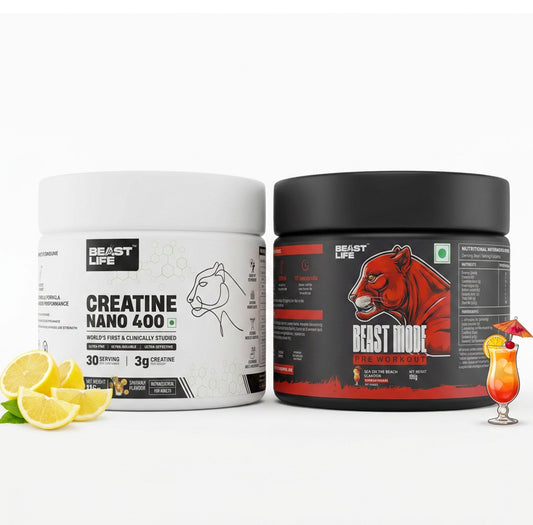 Nano + Preworkout
Combo pack | Creatine Nano 400 | Shikanji | 115 g + Preworkout | Sex On The Beach | 105 g
Regular price ₹1,224Sale price ₹1,224 Regular priceUnit price per₹1,69827% OFFSave 27%Sold out -
 Nano + Isorich
Combo pack | Creatine Nano 400 | Shikanji | 115 g + Isorich blend whey protein | Rich Double Chocolate | 924 g
Regular price ₹4,698Sale price ₹4,698 Regular priceUnit price per₹5,89820% OFFSave 20%Sold out -
 Sold outNano + Whey Protein
Combo pack | Creatine Nano 400 | Shikanji | 115 g + Pro Conc. whey protein | Rich chocolate | 924 g
Regular price ₹4,198Sale price ₹4,198 Regular priceUnit price per₹4,89814% OFFSave 14%Sold out -
 Nano + Performance Protein
Combo pack | Creatine Nano 400 | Shikanji | 115 g + Performance Protein | Chocolate | 1 kg
Regular price ₹2,998Sale price ₹2,998 Regular priceUnit price per₹3,56815% OFFSave 15%Sold out -
 Sold outShikanji | 115G
World’s First Creatine Nano 400 | Finest & Fastest Absorbing | 2X Strength | Shikanji | 115G
Regular price ₹599Sale price ₹599 Regular priceUnit price per₹89933% OFFSave 33%Sold out -
 Sold outBlueberry | 305G
World’s First Creatine Nano 400 | Finest & Fastest Absorbing | 2X Strength| Blueberry | 305G
Regular price ₹1,199Sale price ₹1,199 Regular priceUnit price per₹1,99940% OFFSave 40%Sold out -
 Sold outTropical Tango | 115G
World’s First Creatine Nano 400 | Finest & Fastest Absorbing | 2X Strength | Tropical Tango | 115G
Regular price ₹599Sale price ₹599 Regular priceUnit price per₹89933% OFFSave 33%Sold out -
 Sold outTropical Tango | 305G
World’s First Creatine Nano 400 | Finest & Fastest Absorbing | 2X Strength | Tropical Tango | 305G
Regular price ₹1,199Sale price ₹1,199 Regular priceUnit price per₹1,99940% OFFSave 40%Sold out -
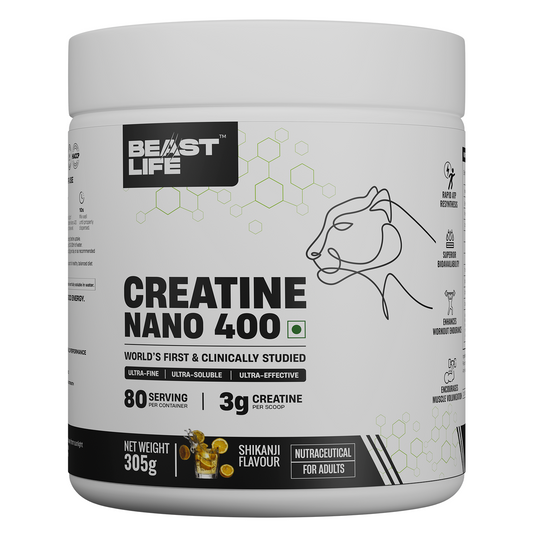 Sold outShikanji | 305G
World’s First Creatine Nano 400 | Finest & Fastest Absorbing | 2X Strength | Shikanji | 305G
Regular price ₹1,199Sale price ₹1,199 Regular priceUnit price per₹1,99940% OFFSave 40%Sold out -
Creatine Monohydrate | Litchi | 319 g
Regular price ₹699Sale price ₹699 Regular priceUnit price per₹1,42250% OFFSave 50%Sold out -
 Sold outPeach | 500g
Valentine’s Limited Couple Combo | Plastic Shaker Red 500 ml + Creatine Monohydrate Peach 500 g
Regular price ₹1,698Sale price ₹1,698 Regular priceUnit price per₹1,99915% OFFSave 15%Sold out -
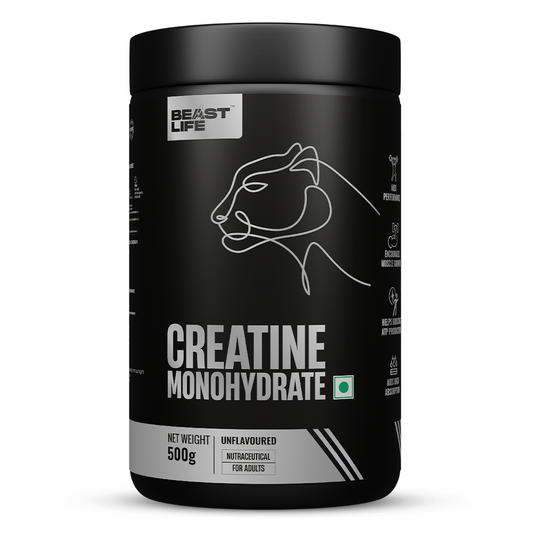
Creatine Monohydrate | Peach | 500 g
Regular price ₹1,199Sale price ₹1,199 Regular priceUnit price per₹1,99940% OFFSave 40%Sold out -
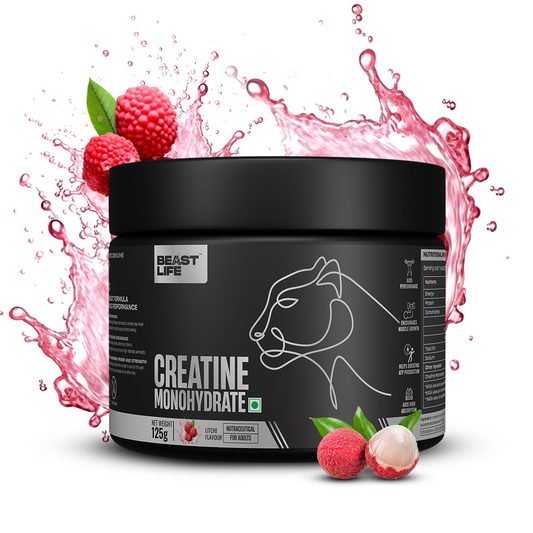
Creatine Monohydrate | Litchi | 125 g
Regular price ₹499Sale price ₹499 Regular priceUnit price per₹75533% OFFSave 33%Sold out -
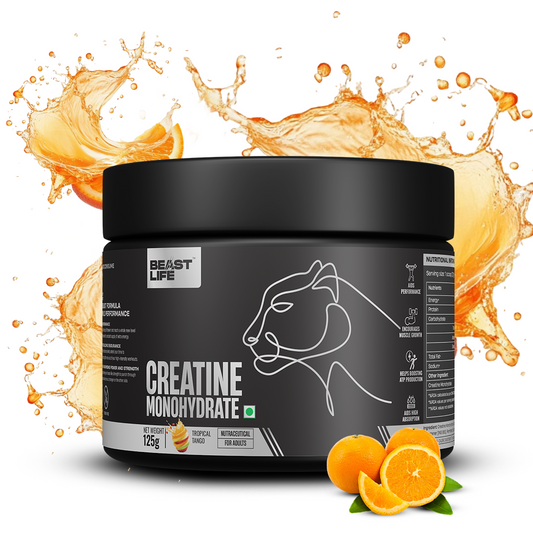
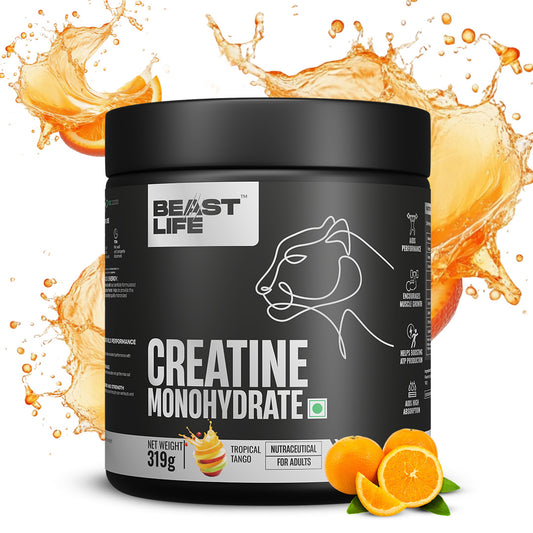
Creatine Monohydrate | Tropical Tango | 125 g
Regular price ₹499Sale price ₹499 Regular priceUnit price per₹75533% OFFSave 33%Sale -
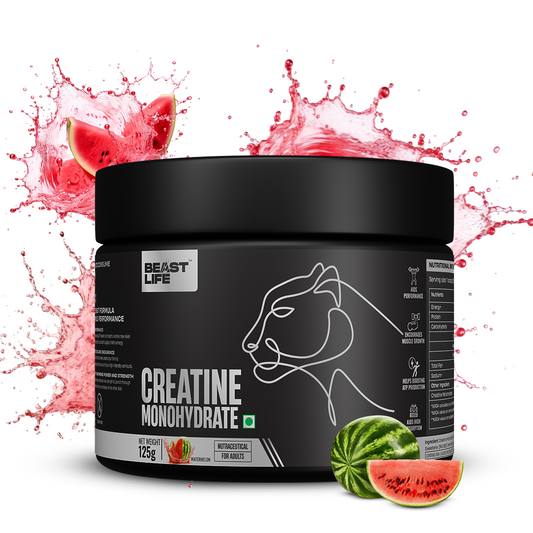
Creatine Monohydrate | Watermelon | 125 g
Regular price ₹499Sale price ₹499 Regular priceUnit price per₹75533% OFFSave 33%Sold out -
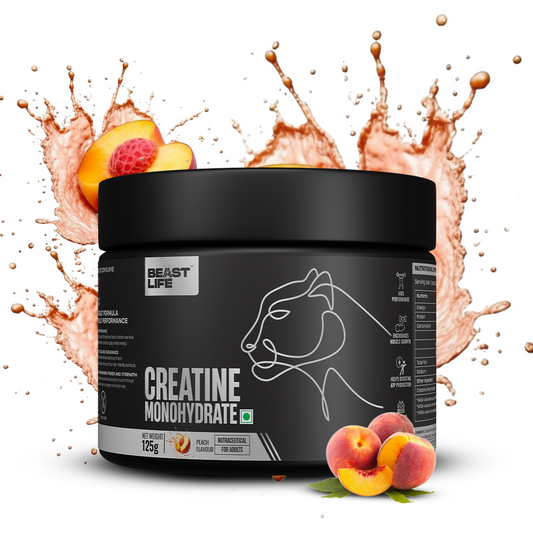
Creatine Monohydrate | Peach | 125 g
Regular price ₹499Sale price ₹499 Regular priceUnit price per₹75533% OFFSave 33%Sale -
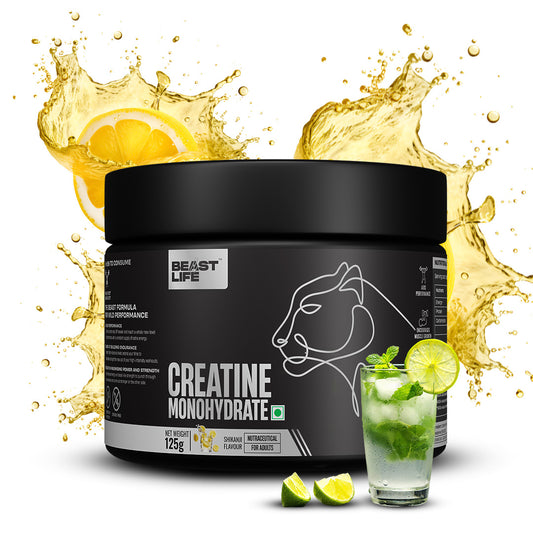
Creatine Monohydrate | Shikanji | 125 g
Regular price ₹499Sale price ₹499 Regular priceUnit price per₹75533% OFFSave 33%Sold out -
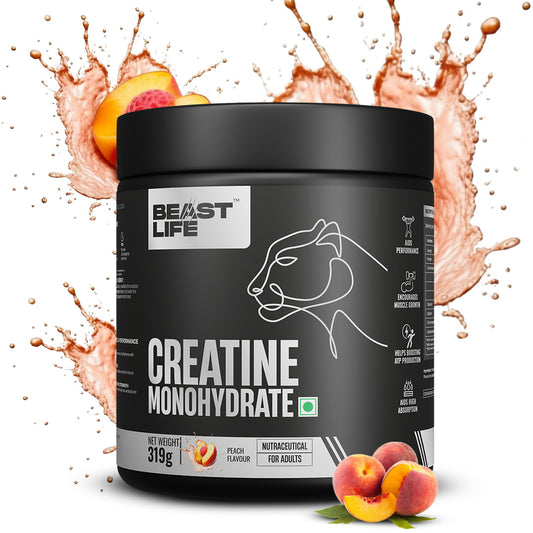
Creatine Monohydrate | Peach | 319 g
Regular price ₹699Sale price ₹699 Regular priceUnit price per₹1,42350% OFFSave 50%Sale -
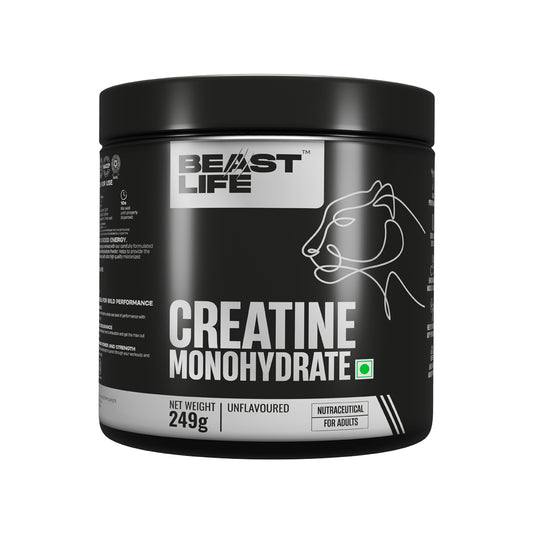
Super Micronized Creatine Monohydrate | 249G
Regular price ₹599Sale price ₹599 Regular priceUnit price per₹1,33455% OFFSave 55%Sale -
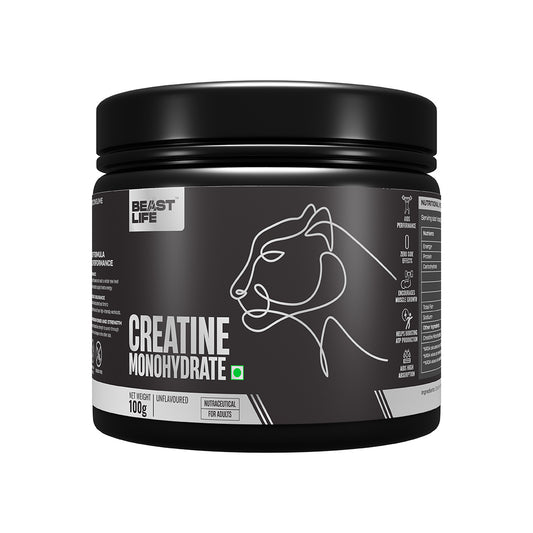
Super Micronized Creatine Monohydrate | 100G
Regular price ₹449Sale price ₹449 Regular priceUnit price per₹66632% OFFSave 32%Sale -
Super Micronized Creatine Monohydrate | 500 g
Regular price ₹1,049Sale price ₹1,049 Regular priceUnit price per₹1,79941% OFFSave 41%Sale -
Creatine Monohydrate | Watermelon | 500 g
Regular price ₹1,199Sale price ₹1,199 Regular priceUnit price per₹1,99940% OFFSave 40%Sold out -
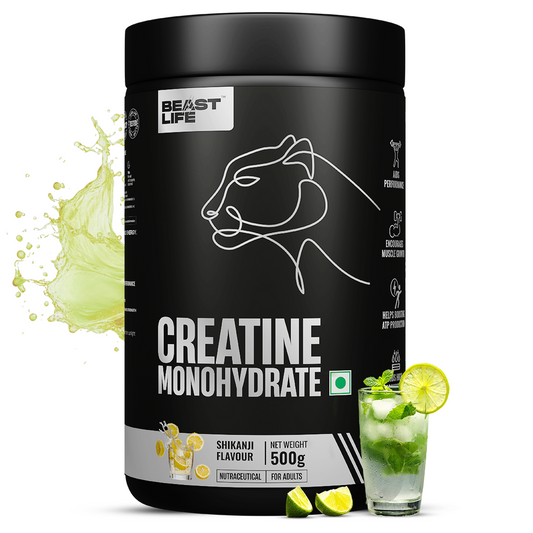
Creatine Monohydrate | Shikanji | 500 g
Regular price ₹1,199Sale price ₹1,199 Regular priceUnit price per₹1,99940% OFFSave 40%Sale -
 Tropical Tango | 500g
Valentine’s Limited Couple Combo | Bold Shaker Red 500 ml + Creatine Monohydrate Tropical Tango 500 g
Regular price ₹1,698Sale price ₹1,698 Regular priceUnit price per₹1,99915% OFFSave 15%Sold out -
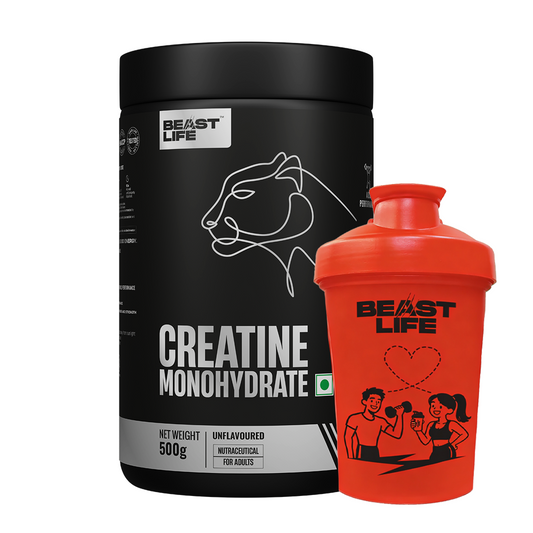 Unflavoured | 500g
Valentine’s Limited Couple Combo | Plastic Shaker Red 500 ml + Creatine Monohydrate Unflavoured 500 g
Regular price ₹1,548Sale price ₹1,548 Regular priceUnit price per₹1,79913% OFFSave 13%Sale -
 Sold outLitchi | 500g
Valentine’s Limited Couple Combo | Plastic Shaker Red 500 ml + Creatine Monohydrate Litchi 500 g
Regular price ₹1,698Sale price ₹1,698 Regular priceUnit price per₹1,99915% OFFSave 15%Sold out -
 Shikanji | 500g
Valentine’s Limited Couple Combo | Plastic Shaker Red 500 ml + Creatine Monohydrate Shikanji 500 g
Regular price ₹1,698Sale price ₹1,698 Regular priceUnit price per₹1,99915% OFFSave 15%Sale -

Valentine’s Limited Couple Combo | Plastic Shaker Red 500 ml + Creatine Monohydrate Watermelon 500 g
Sold outWatermelon | 500gValentine’s Limited Couple Combo | Plastic Shaker Red 500 ml + Creatine Monohydrate Watermelon 500 g
Regular price ₹1,698Sale price ₹1,698 Regular priceUnit price per₹1,99915% OFFSave 15%Sold out -
 Sold outBlueberry | 115G
World’s First Creatine Nano 400 | Finest & Fastest Absorbing | 2X Strength | Blueberry | 115G
Regular price ₹599Sale price ₹599 Regular priceUnit price per₹89933% OFFSave 33%Sold out -
 Nano + Whey Protein
Combo pack | Creatine Nano 400 | Unflavoured | 250 g + Pro concentrate whey protein | Rich chocolate | 1.848 kg
Regular price ₹8,197Sale price ₹8,197 Regular priceUnit price per₹9,79716% OFFSave 16%Sold out -
 Assorted Pack of 3
World’s First Creatine Nano 400| Assorted Pack of 3 | Finest & Fastest Absorbing | 2X Strength | King Size (115g Each)
Regular price ₹2,097Sale price ₹2,097 Regular priceUnit price per₹2,69722% OFFSave 22%Sold out -
 Sold outNano + Performance Protein
Combo pack | Creatine Nano 400 | Unflavoured | 250 g + Performance Protein | Chocolate | 2 kg
Regular price ₹5,897Sale price ₹5,897 Regular priceUnit price per₹7,19818% OFFSave 18%Sold out -
 Nano + Isorich
Combo pack | Creatine Nano 400 | Shikanji | 305 g + Isorich Blend whey protein | Rich Double chocolate | 1.848 kg
Regular price ₹9,197Sale price ₹9,197 Regular priceUnit price per₹11,79722% OFFSave 22%Sold out -
 Nano + Preworkout
Combo pack | Creatine Nano 400 | Tropical Tango | 115 g + Preworkout | Fruit punch | 105 g
Regular price ₹1,198Sale price ₹1,198 Regular priceUnit price per₹1,69829% OFFSave 29%Sold out -
 Sold outNano + Performance Protein
Combo pack | Creatine Nano 400 | Unflavoured | 100 g + Performance Protein | Cold Coffee | 1 kg
Regular price ₹2,998Sale price ₹2,998 Regular priceUnit price per₹3,89823% OFFSave 23%Sold out -
 Sold outNano + Performance Protein
Combo pack | Creatine Nano 400 | Unflavoured | 250 g + Performance Protein | Cold Coffee | 2 kg
Regular price ₹5,897Sale price ₹5,897 Regular priceUnit price per₹7,79824% OFFSave 24%Sold out -
Creatine Monohydrate | Tropical Tango | 319 g
Regular price ₹699Sale price ₹699 Regular priceUnit price per₹1,42350% OFFSave 50%Sold out -
 Nano + Mass Gainer
Combo pack | Creatine Nano 400 | Unflavoured | 250 g + Anabolic Mass Gainer | Belgian Chocolate | 2.5 kg
Regular price ₹3,798Sale price ₹3,798 Regular priceUnit price per₹5,91335% OFF35% OFFSold out -
 Sold outUnflavoured | 250G
World’s First Creatine Nano 400 | Finest & Fastest Absorbing | 2X Strength | 250G | Unflavoured
Regular price ₹1,199Sale price ₹1,199 Regular priceUnit price per₹1,99940% OFFSave 40%Sold out -
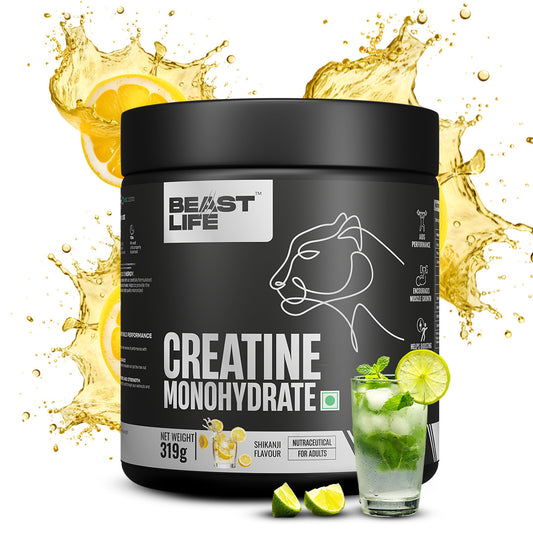
Creatine Monohydrate | Shikanji | 319 g
Regular price ₹699Sale price ₹699 Regular priceUnit price per₹1,42350% OFFSave 50%Sale -
 Sold outNano + Performance Protein
Combo pack | Creatine Nano 400 | Shikanji | 305 g + Performance Protein | Cold Coffee | 2 kg
Regular price ₹5,897Sale price ₹5,897 Regular priceUnit price per₹7,79824% OFFSave 24%Sold out -
Creatine Monohydrate | Tropical Tango | 500 g
Regular price ₹1,199Sale price ₹1,199 Regular priceUnit price per₹1,99940% OFFSave 40%Sale -
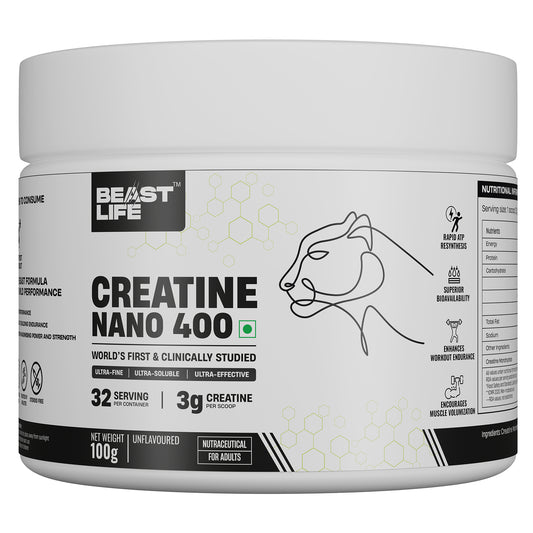 Unflavoured | 100G
World’s First Creatine Nano 400 | Finest & Fastest Absorbing | 2X Strength | 100G | Unflavoured
Regular price ₹599Sale price ₹599 Regular priceUnit price per₹89933% OFFSave 33%Sale -
 Nano + Isorich
Combo pack | Creatine Nano 400 | Unflavoured | 100 g + Isorich Blend whey protein | Rich Double Chocolate | 924 g
Regular price ₹4,698Sale price ₹4,698 Regular priceUnit price per₹5,89820% OFFSave 20%Sold out -
 Nano + Whey Protein
Combo pack | Creatine Nano 400 | Unflavoured | 100 g + Pro concentrate whey protein | Rich chocolate | 924 g
Regular price ₹4,198Sale price ₹4,198 Regular priceUnit price per₹4,89814% OFFSave 14%Sold out -
 Sold outNano + Performance Protein
Combo pack | Creatine Nano 400 | Unflavoured | 100 g + Performance Protein | Chocolate | 1 kg
Regular price ₹2,998Sale price ₹2,998 Regular priceUnit price per₹3,56815% OFFSave 15%Sold out









Beyond the Hype: What Creatine Powder Is and Which Form Is Actually Right for You
Few supplements have a research record as clear and consistent as creatine powder. It has been studied continuously for over three decades, is used by athletes across virtually every sport and training discipline, and is classified as safe and effective for healthy adults by the International Society of Sports Nutrition, the American College of Sports Medicine, and the British Dietetic Association. Despite this strong foundation, confusion about which form to buy, how to take it, and what to realistically expect remains common among gym-goers in India. This guide explains what creatine powder is at a functional level, compares the main available forms with scientific honesty, and provides the practical framework for using it correctly from the first serving.
What Is Creatine Powder and How Does It Function in the Body?
Creatine is a naturally occurring compound synthesised in the body primarily from the amino acids glycine and arginine. It is stored predominantly in skeletal muscle as phosphocreatine. During high-intensity exercise, particularly in explosive activities such as heavy resistance training or sprint-based efforts, phosphocreatine donates a phosphate group to adenosine diphosphate (ADP) to rapidly regenerate ATP (adenosine triphosphate), which is the immediate energy currency of the muscle cell.
Supplementing with creatine powder increases the total creatine stored in your muscles beyond what diet and natural synthesis can provide. This expanded phosphocreatine pool delivers three specific training benefits:
- Additional repetitions are possible at a given training load before muscular failure
- Recovery between sets within a session is faster
- Total training volume at intensity increases, which is the primary driver of long-term muscle development
The practical outcome is a consistent, measurable improvement in training capacity that compounds over weeks and months of use.
Comparing the Four Main Forms of Creatine Powder
Form 1: Creatine Monohydrate
The original and most extensively studied form. Creatine monohydrate is creatine bound to a water molecule, providing approximately 88 percent creatine by weight per gram of powder. Over 500 published studies confirm its safety and efficacy for improving athletic performance and lean mass development.
Key characteristics:
- Largest evidence base of any creatine form by a substantial margin
- Most cost-effective option per gram of creatine delivered
- Available in standard, micronized (smaller particle size), and flavoured variants
- Mild potential for intramuscular water retention in initial weeks (not subcutaneous)
- Minor digestive sensitivity reported by some users at high loading doses; avoidable with a non-loading maintenance protocol
Recommended for: Most athletes across strength, power, and muscle gain goals, particularly those optimising value per rupee.
Form 2: Creatine HCL (Hydrochloride)
Creatine is bound to hydrochloric acid, producing a more water-soluble form. Lower doses are claimed to be effective (1 to 2g daily vs 3 to 5g for monohydrate). However, comparative research does not consistently demonstrate superior muscle creatine saturation outcomes relative to monohydrate. Cost per gram is significantly higher.
Recommended for: A secondary consideration only for users who experience persistent digestive discomfort with monohydrate at maintenance doses.
Form 3: Buffered Creatine (Kre-Alkalyn)
Processed to a higher pH to reduce conversion to creatinine before absorption. Marketing claims focus on reduced stomach breakdown. Current research does not support measurably superior performance outcomes compared to monohydrate.
Form 4: Creatine Ethyl Ester
An esterified form intended for improved cell membrane absorption. Studies have found it less effective at increasing muscle creatine stores than monohydrate and associated with a higher conversion rate to creatinine. Not recommended as a primary creatine form based on available evidence.
The Evidence-Based Summary
For most athletes, evaluating creatine powder, creatine monohydrate at 3 to 5g daily is the most cost-effective, best-studied, and practically reliable choice. Premium pricing for alternative forms is not justified by consistent evidence of meaningfully superior outcomes.
How to Take Creatine Powder Correctly
Loading vs Non-Loading Protocol
Loading protocol: 20g per day split into four 5g doses over five to seven days, followed by a maintenance dose of 3 to 5g daily. This saturates muscle creatine stores rapidly within one week.
Daily maintenance protocol (no loading): 3 to 5g per day consistently. Muscle creatine saturation is achieved within three to four weeks. This is preferred for most individuals as it avoids the minor digestive discomfort some users experience with 20g loading doses.
Both protocols achieve the same muscle creatine saturation endpoint. The loading phase only accelerates the timeline.
Timing Guidance
Daily consistency matters more than precise timing. Post-workout use alongside a carbohydrate and protein source may marginally improve uptake via insulin-mediated creatine transport. On rest days, take creatine at any convenient, consistent time.
For athletes stacking creatine powder with a quality post-workout whey protein supplement, the beast whey protein range provides a clean protein base that pairs effectively with a creatine maintenance dose without negative interactions.
What to Look for on a Creatine Powder Label
- Creatine monohydrate is listed as the sole active ingredient for a pure product
- Creatine content per serving is clearly stated (3 to 5g per serving)
- No proprietary blends that obscure the actual creatine dose
- FSSAI license number on the packaging
- Third-party testing certification, where available
- No unnecessary fillers or artificial additives in an unflavoured creatine product
For athletes optimising post-workout recovery alongside creatine supplementation, the whey protein for weight gain collection provides protein options suited to pairing with a creatine maintenance protocol in a muscle gain phase.
Frequently Asked Questions
Q1: What does creatine powder actually do in the body?
Creatine powder increases phosphocreatine stores in muscle cells, enabling faster ATP regeneration during high-intensity exercise. This supports more training volume at a given intensity, which drives greater muscle and strength adaptations over time.
Q2: Which form of creatine powder is most effective?
Creatine monohydrate has the largest and most consistent body of evidence. Alternative forms (HCL, buffered creatine) have not demonstrated consistently superior muscle saturation or performance outcomes in comparative research.
Q3: Do I need to do a loading phase with creatine powder?
No. A loading phase saturates stores faster (seven days vs three to four weeks) but is not required. A daily maintenance dose of 3 to 5g achieves the same saturation endpoint over a slightly longer timeline without loading dose side effects.
Q4: When is the best time to take creatine powder?
Daily consistency is the most important factor. Post-workout alongside a carbohydrate and protein source may offer a slight uptake advantage, but the practical difference is minimal compared to taking it reliably at any consistent daily time.
Q5: Is creatine powder safe for long-term use?
Research on long-term creatine monohydrate supplementation at 3 to 5g daily has not identified safety concerns in healthy adults. Individuals with pre-existing kidney conditions should consult a healthcare professional before use.
Q6: Does creatine powder cause water retention?
Creatine supplementation causes intracellular water retention within muscle cells, which is associated with increased muscle cell volume. This is distinct from subcutaneous water retention and does not produce a bloated appearance in most users.


