
-
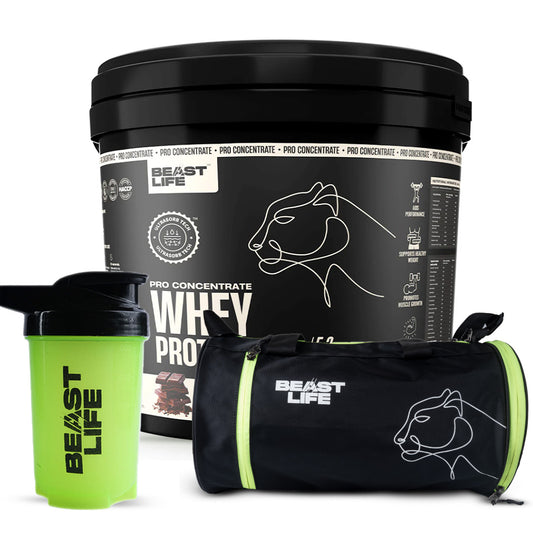 Rich Chocolate 3696g)
Pro Concentrate Whey Protein with Ultrasorb Tech | Rich Chocolate | Free Gym Bag and Shaker | 3.696 kg
Regular price ₹15,913Sale price ₹15,913 Regular priceUnit price per₹16,8945% OFFSave 5%Sale -
Pro Concentrate Whey Protein with Ultrasorb Tech | Butterscotch | 924 g
Regular price ₹3,949Sale price ₹3,949 Regular priceUnit price per₹3,9991% OFFSave 1%Sale -
 Cookies & Cream 3696g
Pro Concentrate Whey Protein with Ultrasorb Tech | Cookies & Cream | 3.696 kg
Regular price ₹14,999Sale price ₹14,999 Regular priceUnit price per₹23,99637% OFFSave 37%Sold out -
 Cookies & Cream | 924g
Pro Concentrate Whey Protein with Ultrasorb Tech | Cookies & Cream | 924 g
Regular price ₹3,949Sale price ₹3,949 Regular priceUnit price per₹3,9991% OFFSave 1%Sold out -
Isorich Blend Whey Protein with Ultrasorb Tech | Chocolate | 1.848 kg
Regular price ₹9,749Sale price ₹9,749 Regular priceUnit price per₹9,7981% OFFSave 1%Sale -
 Cookies & Cream 1848g
Pro Concentrate Whey Protein with Ultrasorb Tech | Cookies & Cream | 1.848 kg
Regular price ₹7,749Sale price ₹7,749 Regular priceUnit price per₹11,99835% OFFSave 35%Sold out -
Pro Concentrate Whey Protein with Ultrasorb Tech | Mango | 924 g
Regular price ₹3,949Sale price ₹3,949 Regular priceUnit price per₹5,99934% OFFSave 34%Sale -
 Fruit Punch | 105g
Combo pack | Preworkout | Fruit punch | 105 g + Creatine Monohydrate | Shikanji | 125 g + Neon Shaker | 500 ml
Regular price ₹1,105Sale price ₹1,105 Regular priceUnit price per₹2,05346% OFFSave 46%Sale


Best Whey Protein for Muscle Gain in India: A Practical Guide for Indian Gym-Goers
Building muscle requires two non-negotiable inputs: a training stimulus and sufficient protein. Most Indian gym-goers have the training sorted. The protein side is where the gap opens up. The average Indian diet delivers 45 to 60 g of protein per day. The research-backed target for active adults trying to build muscle sits at 1.6 to 2.2 g per kilogram of body weight per day. For a 70 kg Indian male, that means 112 to 154 g daily. A well-chosen whey protein is the most efficient and evidence-supported way to close that gap reliably.
This page covers which whey protein format best supports muscle gain, how to use it, what protein quantity actually matters, and how BeastLife's range maps to different training goals and dietary patterns.
Why Whey Protein Is the Most Effective Supplement for Muscle Gain
Whey protein has the highest leucine content of any commercially available protein source. Leucine is the essential amino acid that most directly triggers muscle protein synthesis, the cellular process through which muscle tissue is repaired and built after resistance training. A 2018 meta-analysis in the British Journal of Sports Medicine, covering 49 studies and over 1,800 participants, found that protein supplementation significantly increased gains in muscle mass and strength in people engaged in resistance exercise. Whey, across all its forms, consistently sits at the top of the protein quality rankings with a PDCAAS score of 1.0.
For vegetarian Indians whose primary protein sources are dal, paneer, and curd, which score considerably lower on protein bioavailability measures, whey is not just a convenient supplement. It is the most efficient protein source available at any price point in the Indian market.
How Much Protein Do You Actually Need to Build Muscle?
The answer depends on your body weight and training intensity, not on generic rules of thumb.
For a 60 kg person training regularly: 96 to 132 g of protein per day.
For a 70 kg person training regularly: 112 to 154 g of protein per day.
For an 80 kg person training regularly: 128 to 176 g of protein per day.
Most active Indians are getting 45 to 60 g from food. One to two scoops of a quality whey protein from BeastLife's range delivers an additional 44 to 50 g, bringing the combined total close to or within the target range for most body weights and training intensities. No other single dietary addition closes this gap as efficiently.
Which Whey Protein Format Is Best for Muscle Gain?
Whey protein concentrate: for most people in most phases
Whey protein concentrate contains 70 to 80 percent protein by weight. It retains naturally occurring fat, carbohydrates, and lactose, which contribute to a fuller amino acid and nutritional profile and improve palatability. For someone in a muscle-building phase eating at a caloric surplus, the extra 20 to 30 calories per serving from the fat and carbohydrates in concentrate is not a disadvantage. It adds to the caloric intake that muscle growth requires.
BeastLife's Pro Concentrate Whey Protein with UltraSorb Tech is the core product in this category. Each serving delivers approximately 24 g of protein, available in Rich Chocolate, Mango, Malai Kulfi, Strawberry, Rose, and Kesar Pista with real pista flakes. The Kesar Pista variant is particularly worth noting as one of the few genuinely Indian-formulated protein flavours in the market, not an import adaptation but a product developed specifically for Indian taste preferences.
Available in 924 g, 1.848 kg, and 3.696 kg formats, with the larger sizes providing considerably better value per serving for those supplementing daily across a sustained training block.
Whey isolate blend: for those managing calories or with lactose sensitivity
The Isorich Blend Whey Protein uses a whey isolate and concentrate combination that delivers a higher protein percentage per serving with reduced fat and lactose. This is the more appropriate format for someone in a lean-gaining or recomposition phase, where caloric precision matters more, or for gym-goers with mild lactose sensitivity who experience digestive discomfort with standard concentrate.
With 734 reviews on the Isorich Chocolate 924 g variant and a rating of 4.77 out of 5, this is BeastLife's most socially validated protein product. Available in Chocolate, Coffee, and Vanilla at the 924 g size and in a 3.696 kg format for longer-term buyers.
Performance fermented yeast protein: for digestive compatibility
The Performance Fermented Yeast Protein with UltraSorb Tech combines whey with fermented yeast protein, offering broader nutritional coverage and enhanced digestive tolerance. Available across the widest range of flavours in the BeastLife lineup: Chocolate, Mango, Malai Kulfi, Cookies and Cream, Thandai, Birthday Cake, and Cold Coffee.
This is the right choice for anyone who has previously found standard whey concentrate too heavy on digestion, wants India-specific flavours, or is building their first consistent supplement routine and wants maximum compliance over maximum specification.
Protein Timing for Muscle Gain
Consuming protein post-workout remains the most practically supported timing strategy. Within 30 to 60 minutes after a resistance training session, muscle tissue is primed for amino acid uptake. A 24 to 27 g dose of fast-absorbing whey protein during this window provides the leucine trigger needed to initiate muscle protein synthesis at its peak rate.
Equally important, and less discussed, is protein distribution across the full day. Research supports consuming protein across three to five meals rather than concentrating it in one or two. A typical distribution might look like: protein at breakfast, protein at lunch, a post-workout shake, and protein at dinner. This sustained amino acid availability throughout the day consistently outperforms the same total consumed over fewer meals.
UltraSorb Tech, BeastLife's proprietary absorption technology built into every product in the range, is designed to support the speed and completeness of amino acid uptake from each serving, reducing the digestive lag that can delay nutrient availability after training.
Muscle Gain for Vegetarian Indians: Closing the Protein Gap
A vegetarian Indian male weighing 70 kg and training four to five times per week needs approximately 120 to 140 g of protein per day for meaningful muscle gain. A standard vegetarian Indian diet, even a protein-conscious one, realistically delivers 65 to 80 g from food. The remaining 40 to 75 g needs to come from supplementation.
Two scoops of BeastLife's Pro Concentrate or Isorich Blend per day provides 44 to 54 g of high-bioavailability, lacto-vegetarian protein, covering most of that shortfall without requiring any structural change to the base diet.
For vegetarian hard-gainers who also struggle to eat enough total calories alongside sufficient protein, supplementing with a dedicated mass gainer alongside whey protein addresses both gaps simultaneously. For those in this position, exploring BeastLife's best mass gainer for bulking provides a high-calorie, high-protein option designed to support weight and muscle gain when food volume alone is insufficient.
Muscle Gain Without Excess Fat: The Lean Approach
Not everyone gaining muscle wants to gain body fat alongside it. If you are trying to build lean muscle while keeping fat gain minimal, the Isorich Blend is the more appropriate product. Its lower fat and carbohydrate content per serving makes caloric management easier while still delivering a complete, fast-absorbing protein dose.
For those targeting lean muscle addition specifically and wanting a supplement built around that goal, BeastLife's best lean mass gainer provides a higher-calorie option with a tighter carbohydrate-to-protein ratio than a standard mass gainer, suited to building muscle without the aggressive caloric surplus that standard bulking products deliver.
What to Look for in a Whey Protein for Muscle Gain
Protein percentage per serving: should be 70 to 80 percent by weight for a concentrate and 85 to 92 percent for an isolate or blend. Calculate it yourself: protein grams divided by serving size in grams, multiplied by 100.
Leucine content: should be at least 2.5 g per serving to reliably trigger muscle protein synthesis. Check the amino acid profile on the product page.
Clean ingredient list: protein source, flavouring, sweetener, emulsifier. Products with long ingredient lists, undisclosed blends, or multiple carbohydrate additions are not premium muscle-building products regardless of branding.
Lab testing transparency: BeastLife publishes its lab reports at beastlife.in/pages/lab-reports. This is the clearest externally verifiable indicator of product integrity available to a consumer in India's supplement market.
How to Use Whey Protein for Muscle Gain
Mix one 30 to 35 g scoop with 200 to 250 ml of cold water. Shake for 15 to 20 seconds. Consume within 30 to 60 minutes of completing your resistance training session. On rest days, use one scoop between meals to maintain protein distribution and support ongoing muscle protein synthesis and repair.
At two scoops per day of a 924 g tub, you get approximately 26 servings, covering just under two weeks. A 1.848 kg tub at the same usage rate covers approximately four weeks. Plan purchases accordingly to avoid running out mid-training block.
Precautions
Whey protein is safe for daily use in healthy adults. If you have a pre-existing kidney condition, speak to a doctor before significantly increasing protein intake from any source. Stay well hydrated throughout the day. Do not mix whey protein with hot water or milk, as heat denatures the protein structure and reduces both efficacy and taste.
Frequently Asked Questions
Q: What is the best whey protein for muscle gain in India?
The best whey protein for muscle gain is one that delivers at least 24 g of complete protein per serving with a PDCAAS score of 1.0, uses a clearly disclosed raw material source, publishes independent lab testing data, and comes in a format that suits your digestive tolerance and calorie budget. BeastLife's Pro Concentrate is the right choice for most people in a building phase. The Isorich Blend is more appropriate during a lean-gaining or recomposition phase.
Q: How much whey protein should I take per day for muscle gain?
One to two scoops per day is appropriate for most active adults. The number of scoops depends on how much protein your food is already providing. Calculate your daily protein target using your body weight and goal, measure your current food-based protein intake for a week, and supplement the difference. Do not exceed your total daily protein target by stacking multiple scoops.
Q: Is whey protein enough to build muscle, or do I need other supplements?
Protein is the foundational requirement. Creatine monohydrate is the only other supplement with a strong and consistent evidence base for muscle gain across a wide population. Everything else is secondary. Getting protein right first, consistently, over months, is more impactful than any supplementation stack.
Q: Can I build muscle with whey protein on a vegetarian Indian diet?
Yes. Whey protein is lacto-vegetarian and supplements a plant-heavy diet by providing high-bioavailability complete protein that is difficult to obtain at sufficient quantities from dal, paneer, and curd alone. One to two scoops per day, combined with a protein-conscious vegetarian diet, is a practical and effective approach to muscle gain.
Q: Does whey protein cause bloating or digestive issues?
Standard concentrate can cause discomfort in people with moderate lactose sensitivity. BeastLife's UltraSorb Tech is specifically designed to improve absorption efficiency and reduce digestive load. People with consistent digestive issues on concentrate should switch to the Isorich Blend, which has reduced lactose content and a cleaner macronutrient profile.
Q: What is the difference between whey protein and mass gainer for muscle building?
Whey protein is a high-protein, low-calorie supplement. A mass gainer is a high-calorie product that combines protein with carbohydrates to support a caloric surplus. If your primary challenge is meeting protein targets, use whey protein. If your primary challenge is eating enough total calories to gain weight alongside protein, a mass gainer is the more appropriate category.