Free Creatine ends in:
00
Days
00
hrs
00
Min
00
Sec

Collection: Best Whey Protein Concentrate

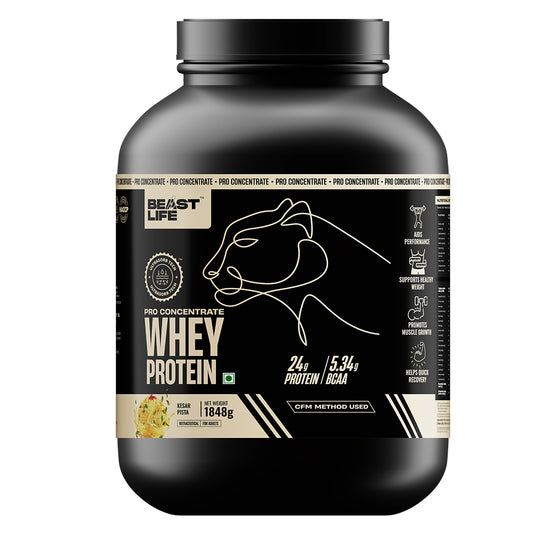
Best Whey Protein Concentrate: The Supplement Most People Actually Need

Whey protein concentrate is the most widely used protein supplement in the world, and for most people, it is the best place to start and often the right place to stay. It delivers a strong amino acid profile, excellent muscle-building support, and practical digestibility at a price point that makes daily use realistic for the majority of Indian consumers. This article covers what makes a concentrate worth buying, who it suits best, and where its limitations begin.

What Is Whey Protein Concentrate?

Whey is a byproduct of cheese manufacturing. After the liquid whey is separated from the curds, it is filtered and dried into a powder. Whey protein concentrate is the least processed commercial form of this powder, retaining protein content between 70 and 80 percent by weight, along with small amounts of fat, carbohydrates, and lactose.

The fat and carbohydrate content, often treated as a drawback in marketing, actually contribute to the flavour, texture, and palatability of concentrate products. This is why concentrate-based products tend to taste better and mix more smoothly than many isolates.

The nutritional profile of a standard WPC

A typical 30 to 33 g scoop of whey protein concentrate delivers:

Protein: 22 to 25 g

Carbohydrates: 3 to 5 g

Fat: 2 to 4 g

Lactose: 2 to 5 g

Calories: 120 to 140

This profile suits most people who are training regularly, eating a balanced diet, and looking to increase their total daily protein intake without overthinking every macro.

Why Most People Benefit More from Concentrate Than Isolate

Cost per gram of protein

Whey concentrate is significantly cheaper than isolate per gram of delivered protein. For someone consuming one to two scoops per day over the course of a year, the difference can run into thousands of rupees. If you are meeting your daily protein targets and seeing the results you want, there is no functional reason to pay more for isolate.

Bioactive compounds

Whey concentrate retains more of the naturally occurring growth factors and immune-supporting proteins present in whey than highly processed isolates, particularly ion exchange isolates. These include immunoglobulins, lactoferrin, and bovine serum albumin. For overall health and immune support, concentrate is not nutritionally inferior to isolate. For pure muscle protein synthesis, both forms deliver comparable results when total daily protein intake is matched.

Digestibility for most people

The lactose content in concentrate, approximately 2 to 5 g per serving, is not a problem for the majority of people. Clinical lactose intolerance is defined by sensitivity to larger amounts of lactose, typically 12 g or more at once. Most people who describe themselves as lactose-sensitive can tolerate the amount present in one scoop of concentrate without symptoms. If you consistently experience discomfort after a single scoop, switching to an isolate is warranted. If you have never tested this, do not assume you need to pay isolate prices.

What Makes the Best Whey Protein Concentrate?

Protein percentage

The first calculation to run on any concentrate is protein per serving weight. A good WPC should deliver 70 to 80 percent protein by weight. Below 70 percent and you are likely looking at a heavily blended product with fillers or excessive carbohydrate additions.

Ingredient quality

The best concentrate products have short ingredient lists: whey protein concentrate, natural or artificial flavouring, a sweetener such as sucralose or stevia, and an emulsifier. Products with ten or more ingredients, multiple carbohydrate sources, thickeners, and creamers are not premium concentrates regardless of branding.

Amino acid completeness

Whey concentrate is a complete protein and contains all essential amino acids. The leucine content per serving should be at least 2 to 2.5 g, which is sufficient to stimulate muscle protein synthesis. If a product does not publish its amino acid profile, contact the brand directly or look for independent testing data.

Mixing quality

Concentrate should dissolve in 200 to 250 ml of cold water with 15 to 20 seconds of shaking in a standard shaker. Excessive clumping, floating powder, or a gritty texture are signs of poor emulsification or low-quality raw material. Mixing in milk is perfectly appropriate for concentrates and improves both taste and protein content per serving.

Who Should Use Whey Protein Concentrate?

Beginners entering the gym for the first time

If you are in the first three to twelve months of training, your body responds to protein in large part simply because it is now receiving adequate amounts after years of insufficient intake. The marginal difference between isolate and concentrate at this stage is irrelevant. Start with a quality concentrate, establish the habit, and upgrade only when your training and nutrition are sophisticated enough to justify it.

People without digestive issues

If you have no diagnosed lactose intolerance and no consistent digestive discomfort after dairy, concentrate is appropriate. Do not pay isolate prices to solve a problem you do not have.

Individuals eating in a calorie surplus or maintenance

If you are bulking or eating at maintenance calories, the extra 20 to 30 calories per serving from the fat and carbohydrates in concentrate is irrelevant. Isolate's caloric advantage matters most during a strict cut.

Budget-conscious buyers who train consistently

Supplement consistency matters more than supplement quality at the margins. A person who takes a concentrate reliably every day for twelve months will see better results than someone who buys an expensive isolate, runs out mid-month, and stops supplementing. Sustainability of use is a real factor.

Whey Concentrate for Muscle Gain in India

How much do you actually need?

For muscle gain, the target is 1.6 to 2.2 g of protein per kilogram of body weight per day. A 70 kg Indian male needs 112 to 154 g daily. If food provides 70 to 80 g, two scoops of a quality concentrate provide 44 to 50 g more, bringing the total to 114 to 130 g. That covers the requirement comfortably for most training intensities.

Concentrate for vegetarian Indian bodybuilders

This is where the calculation becomes more critical. A vegetarian Indian male weighing 70 kg who trains seriously needs 120 to 140 g of protein per day. Food sources, even with soy, paneer, curd, and legumes, rarely exceed 80 g without extreme dietary effort. Two scoops of whey concentrate per day provide the additional 44 to 50 g needed to bridge that gap.

If you are a vegetarian hard-gainer who also struggles with calorie intake, adding a mass gainer to your routine alongside your concentrate can help you hit both protein and calorie targets simultaneously. If you are already eating adequate calories, a best lean mass gainer can support lean muscle addition without the excessive carbohydrate load of a standard high-calorie gainer.

Protein timing with concentrate

Because concentrate contains some fat and lactose, it digests slightly slower than isolate. This makes it slightly better suited as a meal supplement or pre-bed shake rather than an immediate post-workout option. However, the practical difference in absorption speed is not large enough to significantly affect results. Use it when it fits your schedule, and you will not go wrong.

Common Mistakes When Buying Whey Concentrate in India

Choosing on price alone

The cheapest concentrate in the market is almost always cheap for a reason. Substandard whey sources, amino acid spiking, and inflated serving sizes are all more common at the bottom of the price range. A reliable concentrate from a trustworthy brand typically costs between 900 and 1,800 rupees per kg. Products significantly below this range deserve scrutiny.

Mistaking a blend for a concentrate

Some products list multiple protein sources including soy protein isolate, casein, or egg albumin alongside whey concentrate. These are blends, not concentrates, and their amino acid kinetics are different. If your goal is specifically the benefits of whey, confirm that whey protein concentrate is the primary and dominant ingredient.

Not accounting for flavour fatigue

If you are taking protein every day, flavour matters for long-term compliance. Buy a smaller pack or a sample before committing to a large tub of a new flavour. This is a practical consideration that most buyers ignore until they are halfway through a 5 kg tub of something they dislike.

Whey Concentrate vs Mass Gainer: Choosing the Right Product

These two categories are frequently confused by new buyers. Whey concentrate is a protein supplement with minimal carbohydrates and fat. A mass gainer is a high-calorie product that combines protein with a significant carbohydrate load, designed to support a caloric surplus for weight and muscle gain.

If you are underweight, struggling to gain weight despite eating, or in an intentional bulking phase where adding body mass is the primary goal, a mass gainer serves a different purpose than a concentrate. For someone in this situation, a product from BeastLife's mass gainer 5kg range provides the caloric volume to support real mass gain, whereas a concentrate alone will not deliver enough total calories for a hard-gainer to make progress.

If you are of average weight and simply want to increase protein intake without adding significant calories, concentrate is the correct category.

How to Get the Most from Whey Protein Concentrate

Daily routine integration

The best time to take concentrate is whenever you are most likely to take it consistently. Post-workout is a logical choice, but pre-workout, with breakfast, or as a mid-morning snack all work. The most important variable is consistency, not timing to the minute.

Combining with food

Mixing a scoop of concentrate into Greek yoghurt, oatmeal, or a homemade smoothie increases both the palatability and the nutritional value of the meal. This is more effective for muscle building than drinking protein in isolation, because combining it with carbohydrates and fats moderates the insulin response and supports sustained amino acid availability.

Tracking your intake

Many people start supplementing with whey and assume they are now hitting their protein targets. Until you have tracked your total daily protein intake for at least a week, you do not actually know your baseline. Use a free app to log protein from food and supplements together. The number is often lower than expected, even with supplementation.

Frequently Asked Questions

Q1: Is whey protein concentrate good for muscle gain?

Yes. Whey protein concentrate delivers a complete amino acid profile with sufficient leucine content to stimulate muscle protein synthesis. Research comparing muscle gain between concentrate and isolate users, when total protein intake is matched, shows no meaningful difference. The primary reasons to upgrade to isolate are lactose intolerance, calorie restriction, or advanced training needs, not a fundamental inadequacy in concentrate for muscle building.

Q2: How many scoops of whey concentrate should I take per day?

One to two scoops per day is appropriate for most people. One scoop covers a significant protein gap when food intake is close to but not quite at your daily target. Two scoops are reasonable if food protein is consistently low or training volume is high. Do not use protein powder as a replacement for meals. It works as a supplement to a food-first approach.

Q3: Can I take whey concentrate if I am lactose intolerant?

Mild lactose intolerance often allows one scoop of concentrate without symptoms because the lactose content per serving, approximately 2 to 5 g, is below the threshold that triggers reactions in most people. If you experience consistent digestive issues after one scoop of concentrate, switch to an isolate. If you have severe lactose intolerance, isolate or a plant-based protein is a more appropriate choice.

Q4: What is the difference between whey concentrate and a mass gainer?

Whey concentrate is a protein-focused supplement with 120 to 140 calories per scoop. A mass gainer is a high-calorie product with 400 to 1,200 calories per serving, derived primarily from carbohydrates with added protein. Mass gainers are designed to create a caloric surplus for weight and muscle gain. Concentrate is designed to increase protein intake without significantly affecting total calorie intake. They serve different purposes and are not interchangeable.

Q5: Is whey protein concentrate vegetarian?

Yes. Whey is derived from milk and is suitable for lacto-vegetarians. It is not suitable for vegans. Most whey concentrate products in India are vegetarian, but check the label for any added ingredients such as gelatin capsules in certain formats that may not be vegetarian.