
-
 Sold outNano + Performance Protein
Combo pack | Creatine Nano 400 | Shikanji | 115 g + Performance Protein | Cold Coffee | 1 kg
Regular price ₹2,998Sale price ₹2,998 Regular priceUnit price per₹3,89823% OFFSave 23%Sold out -
 Sold outNano + Mass Gainer
Combo pack | Creatine Nano 400 | Shikanji | 115 g + Anabolic Mass Gainer | Belgian Chocolate | 1 kg
Regular price ₹1,898Sale price ₹1,898 Regular priceUnit price per₹2,67829% OFF29% OFFSold out -
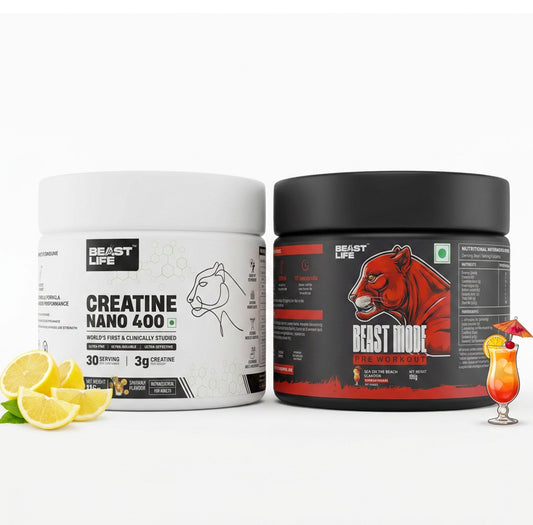 Nano + Preworkout
Combo pack | Creatine Nano 400 | Shikanji | 115 g + Preworkout | Sex On The Beach | 105 g
Regular price ₹1,224Sale price ₹1,224 Regular priceUnit price per₹1,69827% OFFSave 27%Sold out -
 Nano + Isorich
Combo pack | Creatine Nano 400 | Shikanji | 115 g + Isorich blend whey protein | Rich Double Chocolate | 924 g
Regular price ₹4,698Sale price ₹4,698 Regular priceUnit price per₹5,89820% OFFSave 20%Sold out -
 Sold outNano + Whey Protein
Combo pack | Creatine Nano 400 | Shikanji | 115 g + Pro Conc. whey protein | Rich chocolate | 924 g
Regular price ₹4,198Sale price ₹4,198 Regular priceUnit price per₹4,89814% OFFSave 14%Sold out -
 Nano + Performance Protein
Combo pack | Creatine Nano 400 | Shikanji | 115 g + Performance Protein | Chocolate | 1 kg
Regular price ₹2,998Sale price ₹2,998 Regular priceUnit price per₹3,56815% OFFSave 15%Sold out -
 Sold outShikanji | 115G
World’s First Creatine Nano 400 | Finest & Fastest Absorbing | 2X Strength | Shikanji | 115G
Regular price ₹599Sale price ₹599 Regular priceUnit price per₹89933% OFFSave 33%Sold out -
 Sold outBlueberry | 305G
World’s First Creatine Nano 400 | Finest & Fastest Absorbing | 2X Strength| Blueberry | 305G
Regular price ₹1,199Sale price ₹1,199 Regular priceUnit price per₹1,99940% OFFSave 40%Sold out -
 Sold outTropical Tango | 115G
World’s First Creatine Nano 400 | Finest & Fastest Absorbing | 2X Strength | Tropical Tango | 115G
Regular price ₹599Sale price ₹599 Regular priceUnit price per₹89933% OFFSave 33%Sold out -
 Sold outTropical Tango | 305G
World’s First Creatine Nano 400 | Finest & Fastest Absorbing | 2X Strength | Tropical Tango | 305G
Regular price ₹1,199Sale price ₹1,199 Regular priceUnit price per₹1,99940% OFFSave 40%Sold out -
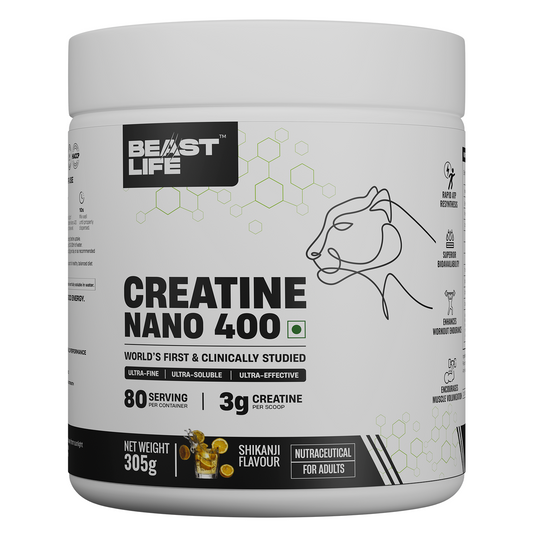 Sold outShikanji | 305G
World’s First Creatine Nano 400 | Finest & Fastest Absorbing | 2X Strength | Shikanji | 305G
Regular price ₹1,199Sale price ₹1,199 Regular priceUnit price per₹1,99940% OFFSave 40%Sold out -
Creatine Monohydrate | Litchi | 319 g
Regular price ₹699Sale price ₹699 Regular priceUnit price per₹1,42250% OFFSave 50%Sold out -
 Sold outPeach | 500g
Valentine’s Limited Couple Combo | Plastic Shaker Red 500 ml + Creatine Monohydrate Peach 500 g
Regular price ₹1,698Sale price ₹1,698 Regular priceUnit price per₹1,99915% OFFSave 15%Sold out -
Creatine Monohydrate | Peach | 500 g
Regular price ₹1,199Sale price ₹1,199 Regular priceUnit price per₹1,99940% OFFSave 40%Sold out -
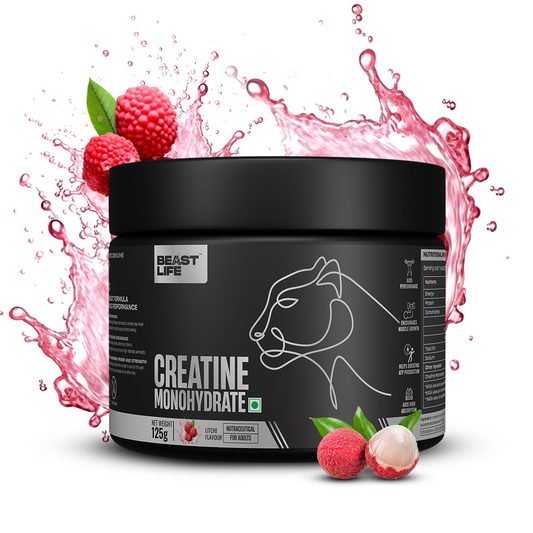
Creatine Monohydrate | Litchi | 125 g
Regular price ₹499Sale price ₹499 Regular priceUnit price per₹75533% OFFSave 33%Sold out -
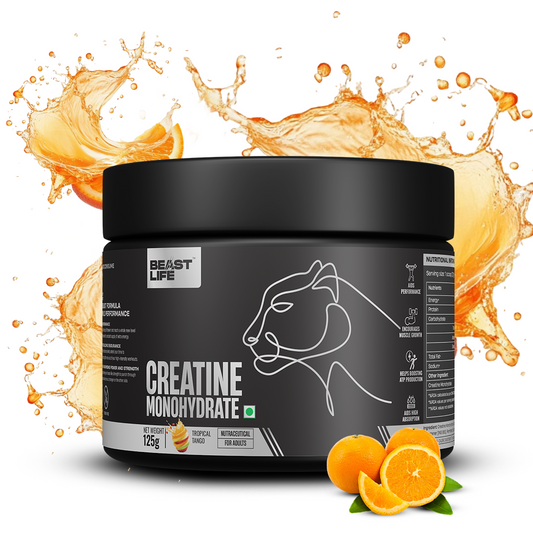
Creatine Monohydrate | Tropical Tango | 125 g
Regular price ₹499Sale price ₹499 Regular priceUnit price per₹75533% OFFSave 33%Sale -
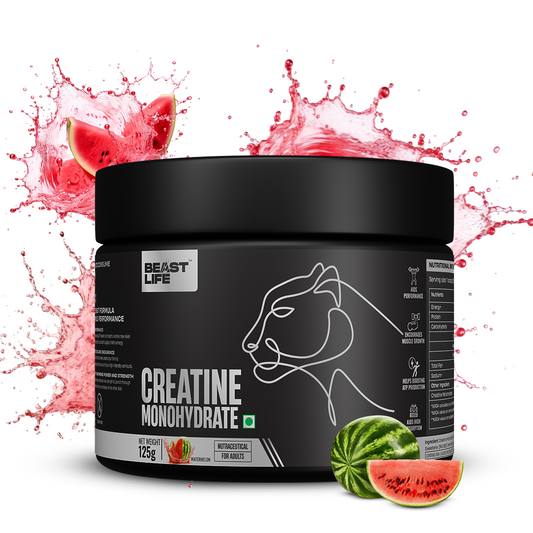
Creatine Monohydrate | Watermelon | 125 g
Regular price ₹499Sale price ₹499 Regular priceUnit price per₹75533% OFFSave 33%Sold out -
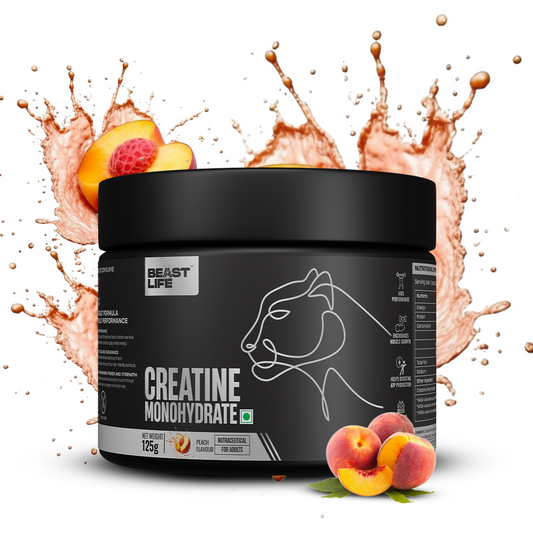
Creatine Monohydrate | Peach | 125 g
Regular price ₹499Sale price ₹499 Regular priceUnit price per₹75533% OFFSave 33%Sale -
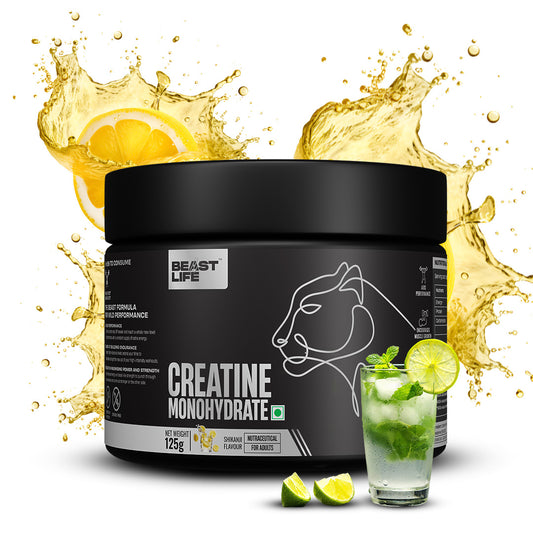
Creatine Monohydrate | Shikanji | 125 g
Regular price ₹499Sale price ₹499 Regular priceUnit price per₹75533% OFFSave 33%Sold out -
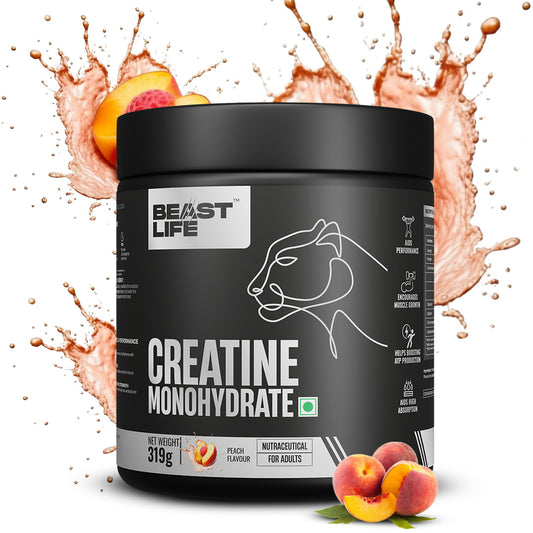
Creatine Monohydrate | Peach | 319 g
Regular price ₹699Sale price ₹699 Regular priceUnit price per₹1,42350% OFFSave 50%Sale -
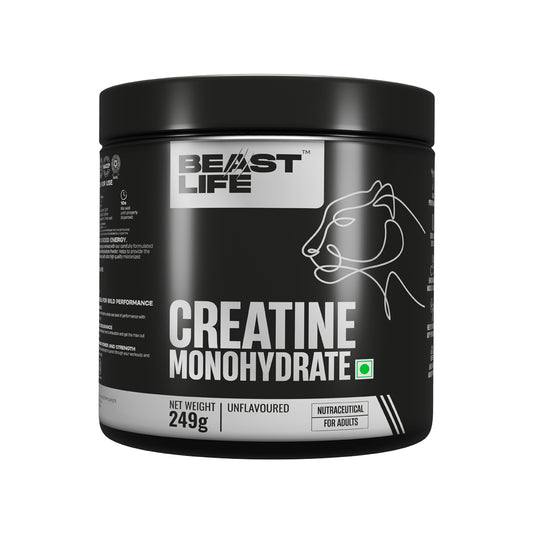
Super Micronized Creatine Monohydrate | 249G
Regular price ₹599Sale price ₹599 Regular priceUnit price per₹1,33455% OFFSave 55%Sale -
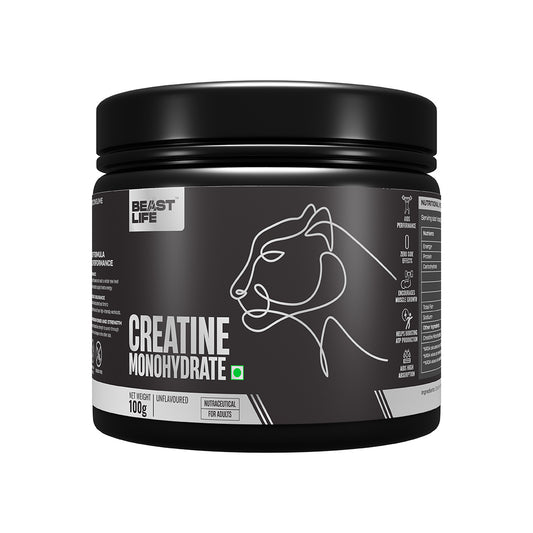
Super Micronized Creatine Monohydrate | 100G
Regular price ₹449Sale price ₹449 Regular priceUnit price per₹66632% OFFSave 32%Sale -
Super Micronized Creatine Monohydrate | 500 g
Regular price ₹1,049Sale price ₹1,049 Regular priceUnit price per₹1,79941% OFFSave 41%Sale -
Creatine Monohydrate | Watermelon | 500 g
Regular price ₹1,199Sale price ₹1,199 Regular priceUnit price per₹1,99940% OFFSave 40%Sold out -
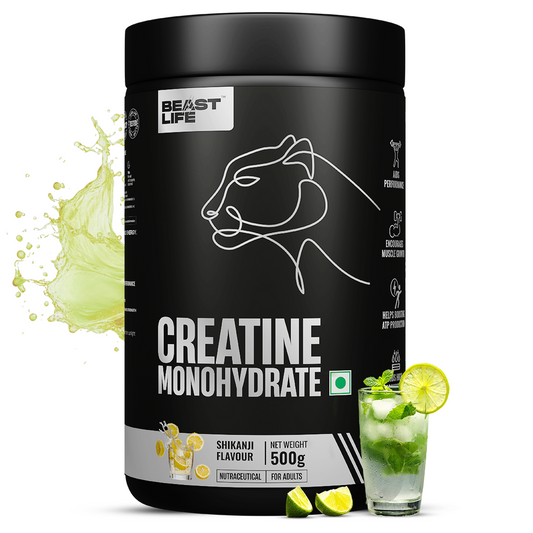
Creatine Monohydrate | Shikanji | 500 g
Regular price ₹1,199Sale price ₹1,199 Regular priceUnit price per₹1,99940% OFFSave 40%Sale -
 Tropical Tango | 500g
Valentine’s Limited Couple Combo | Bold Shaker Red 500 ml + Creatine Monohydrate Tropical Tango 500 g
Regular price ₹1,698Sale price ₹1,698 Regular priceUnit price per₹1,99915% OFFSave 15%Sale -
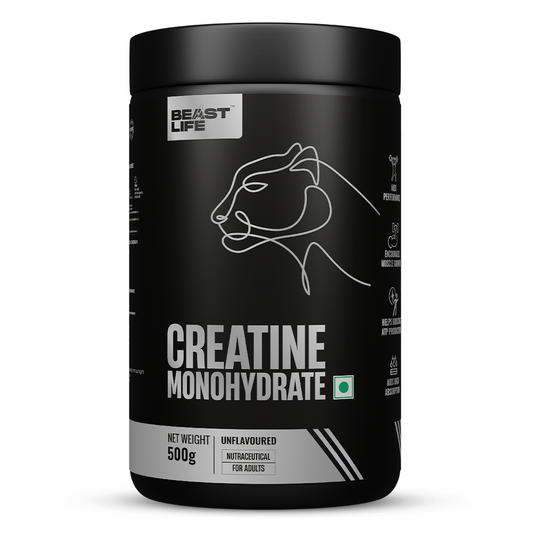
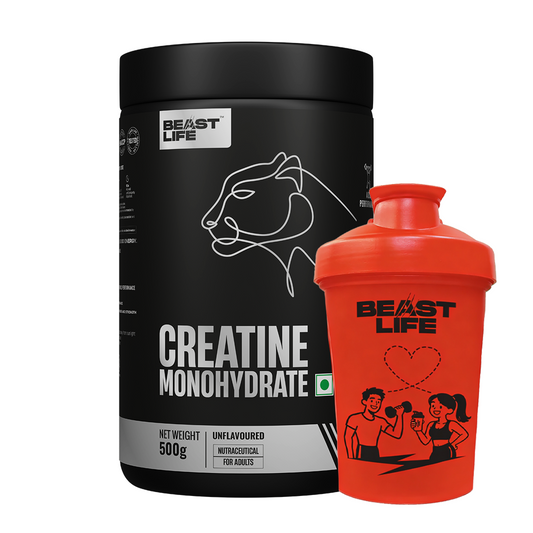 Unflavoured | 500g
Valentine’s Limited Couple Combo | Plastic Shaker Red 500 ml + Creatine Monohydrate Unflavoured 500 g
Regular price ₹1,548Sale price ₹1,548 Regular priceUnit price per₹1,79913% OFFSave 13%Sale -
 Sold outLitchi | 500g
Valentine’s Limited Couple Combo | Plastic Shaker Red 500 ml + Creatine Monohydrate Litchi 500 g
Regular price ₹1,698Sale price ₹1,698 Regular priceUnit price per₹1,99915% OFFSave 15%Sold out -
 Shikanji | 500g
Valentine’s Limited Couple Combo | Plastic Shaker Red 500 ml + Creatine Monohydrate Shikanji 500 g
Regular price ₹1,698Sale price ₹1,698 Regular priceUnit price per₹1,99915% OFFSave 15%Sale -

Valentine’s Limited Couple Combo | Plastic Shaker Red 500 ml + Creatine Monohydrate Watermelon 500 g
Sold outWatermelon | 500gValentine’s Limited Couple Combo | Plastic Shaker Red 500 ml + Creatine Monohydrate Watermelon 500 g
Regular price ₹1,698Sale price ₹1,698 Regular priceUnit price per₹1,99915% OFFSave 15%Sold out -
 Sold outBlueberry | 115G
World’s First Creatine Nano 400 | Finest & Fastest Absorbing | 2X Strength | Blueberry | 115G
Regular price ₹599Sale price ₹599 Regular priceUnit price per₹89933% OFFSave 33%Sold out -
 Nano + Whey Protein
Combo pack | Creatine Nano 400 | Unflavoured | 250 g + Pro concentrate whey protein | Rich chocolate | 1.848 kg
Regular price ₹8,197Sale price ₹8,197 Regular priceUnit price per₹9,79716% OFFSave 16%Sold out -
 Assorted Pack of 3
World’s First Creatine Nano 400| Assorted Pack of 3 | Finest & Fastest Absorbing | 2X Strength | King Size (115g Each)
Regular price ₹2,097Sale price ₹2,097 Regular priceUnit price per₹2,69722% OFFSave 22%Sold out -
 Sold outNano + Performance Protein
Combo pack | Creatine Nano 400 | Unflavoured | 250 g + Performance Protein | Chocolate | 2 kg
Regular price ₹5,897Sale price ₹5,897 Regular priceUnit price per₹7,19818% OFFSave 18%Sold out -
 Nano + Isorich
Combo pack | Creatine Nano 400 | Shikanji | 305 g + Isorich Blend whey protein | Rich Double chocolate | 1.848 kg
Regular price ₹9,197Sale price ₹9,197 Regular priceUnit price per₹11,79722% OFFSave 22%Sold out -
 Nano + Preworkout
Combo pack | Creatine Nano 400 | Tropical Tango | 115 g + Preworkout | Fruit punch | 105 g
Regular price ₹1,198Sale price ₹1,198 Regular priceUnit price per₹1,69829% OFFSave 29%Sold out -
 Nano + Performance Protein
Combo pack | Creatine Nano 400 | Unflavoured | 100 g + Performance Protein | Cold Coffee | 1 kg
Regular price ₹2,998Sale price ₹2,998 Regular priceUnit price per₹3,89823% OFFSave 23%Sale -
 Sold outNano + Performance Protein
Combo pack | Creatine Nano 400 | Unflavoured | 250 g + Performance Protein | Cold Coffee | 2 kg
Regular price ₹5,897Sale price ₹5,897 Regular priceUnit price per₹7,79824% OFFSave 24%Sold out -
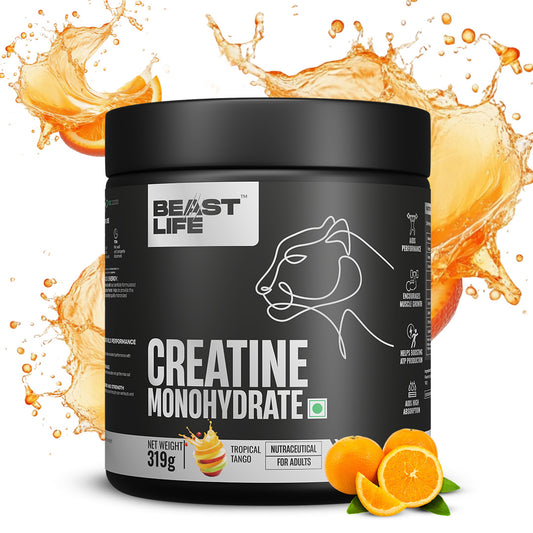
Creatine Monohydrate | Tropical Tango | 319 g
Regular price ₹699Sale price ₹699 Regular priceUnit price per₹1,42350% OFFSave 50%Sold out -
 Nano + Mass Gainer
Combo pack | Creatine Nano 400 | Unflavoured | 250 g + Anabolic Mass Gainer | Belgian Chocolate | 2.5 kg
Regular price ₹3,798Sale price ₹3,798 Regular priceUnit price per₹5,91335% OFF35% OFFSold out -
 Sold outUnflavoured | 250G
World’s First Creatine Nano 400 | Finest & Fastest Absorbing | 2X Strength | 250G | Unflavoured
Regular price ₹1,199Sale price ₹1,199 Regular priceUnit price per₹1,99940% OFFSave 40%Sold out -
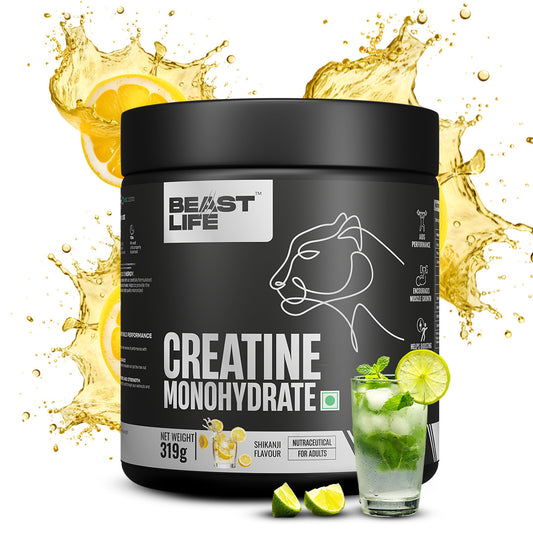
Creatine Monohydrate | Shikanji | 319 g
Regular price ₹699Sale price ₹699 Regular priceUnit price per₹1,42350% OFFSave 50%Sale -
 Sold outNano + Performance Protein
Combo pack | Creatine Nano 400 | Shikanji | 305 g + Performance Protein | Cold Coffee | 2 kg
Regular price ₹5,897Sale price ₹5,897 Regular priceUnit price per₹7,79824% OFFSave 24%Sold out -
Creatine Monohydrate | Tropical Tango | 500 g
Regular price ₹1,199Sale price ₹1,199 Regular priceUnit price per₹1,99940% OFFSave 40%Sale -
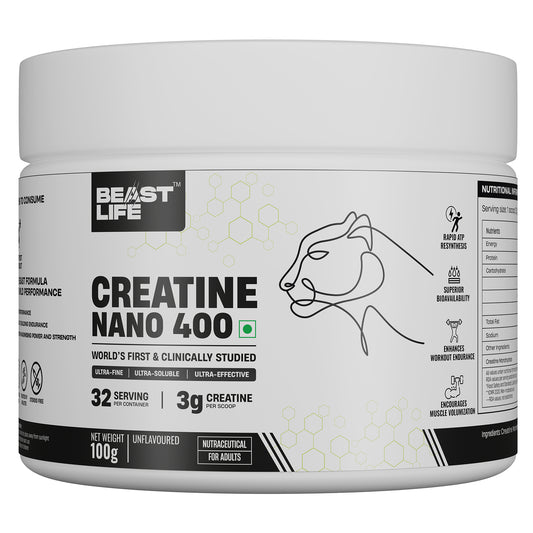 Unflavoured | 100G
World’s First Creatine Nano 400 | Finest & Fastest Absorbing | 2X Strength | 100G | Unflavoured
Regular price ₹599Sale price ₹599 Regular priceUnit price per₹89933% OFFSave 33%Sale -
 Nano + Isorich
Combo pack | Creatine Nano 400 | Unflavoured | 100 g + Isorich Blend whey protein | Rich Double Chocolate | 924 g
Regular price ₹4,698Sale price ₹4,698 Regular priceUnit price per₹5,89820% OFFSave 20%Sold out -
 Nano + Whey Protein
Combo pack | Creatine Nano 400 | Unflavoured | 100 g + Pro concentrate whey protein | Rich chocolate | 924 g
Regular price ₹4,198Sale price ₹4,198 Regular priceUnit price per₹4,89814% OFFSave 14%Sale -
 Nano + Performance Protein
Combo pack | Creatine Nano 400 | Unflavoured | 100 g + Performance Protein | Chocolate | 1 kg
Regular price ₹2,998Sale price ₹2,998 Regular priceUnit price per₹3,56815% OFFSave 15%Sale









Which Creatine Supplement Is Right for You? A No-Nonsense Decision Guide
Before searching for the best creatine supplement, answer three questions honestly. First: what is your primary training goal, whether that is strength and power, muscle mass, or endurance performance? Second: Have you used creatine before, and if yes, how did your body respond to it? Third: What is your monthly supplement budget, and how much does the cost per serving matter within it? These three answers narrow the field considerably and prevent the very common mistake of purchasing the most expensive or most marketed creatine product when a simpler, better-researched option would serve the actual goal far more effectively. This guide walks through each decision point, covers the main creatine supplement categories, and closes with a clear framework for making a purchase you will not regret.
Decision Point 1: Match Your Creatine Choice to Your Training Goal
Strength and Power Training
Creatine supplementation has the strongest documented evidence for improving performance in explosive, high-intensity activities. Phosphocreatine is the dominant energy source for efforts of two to ten seconds at maximum intensity, making creatine directly relevant to the primary energy demands of resistance training, powerlifting, and sprint-based sports. Athletes in these disciplines see the most consistent and measurable performance improvements from creatine supplementation.
Muscle Hypertrophy
Creatine supports hypertrophy indirectly but effectively by enabling greater training volume at a given intensity. More volume over time creates a stronger progressive overload stimulus, which is the primary driver of muscle growth. Research consistently shows creatine-supplemented athletes achieve approximately 1 to 2kg more lean mass gain over 4 to 12 week programmes compared to placebo-controlled groups following identical training.
Endurance Performance
The benefit profile is less pronounced for purely aerobic endurance activities. Creatine's mechanism operates primarily in the anaerobic energy system. Endurance athletes who incorporate interval training or resistance training into their programme benefit from creatine supplementation for those sessions, but the benefit for continuous aerobic performance at submaximal intensity is marginal.
Decision Point 2: Evaluate Each Creatine Form Honestly
Creatine Monohydrate: The Evidence-First Choice
Best for: Most athletes across strength, power, and muscle gain goals
- Over 500 published studies support the safety and efficacy
- Most cost-effective option per gram of creatine
- Available in unflavoured, flavoured, and micronized
- Standard effective dose: 3 to 5g daily
- Minor early digestive sensitivity in some users at high loading doses, avoidable with a non-loading protocol
Micronized Creatine Monohydrate: The Mixability Upgrade
Best for: Athletes who mix creatine into shakes and prioritise texture consistency
- Same molecule as standard monohydrate with reduced particle size
- Improved dissolution in liquid versus standard powder
- Marginally higher cost per serving than standard monohydrate
- No demonstrated advantage over standard monohydrate for muscle saturation or performance outcomes
Creatine HCL: The Low-Dose Option
Best for: Users experiencing consistent digestive discomfort with monohydrate at maintenance doses
- Claimed to be effective at lower doses (1 to 2g) due to improved solubility
- Significantly more expensive per gram than monohydrate
- Not consistently shown to be superior to monohydrate in muscle saturation research
- Limited long-term safety data compared to monohydrate
Creatine Blends and "Advanced" Formulas
Best for: Nobody in particular, based on current evidence
- Often combine multiple creatine forms with proprietary blend concealment
- Higher price per serving than the standalone monohydrate without demonstrated additional benefit
- Marketing investment is disproportionate to the evidence supporting the premium
Decision Point 3: Quality Markers to Verify Before Any Purchase
Regardless of which form you select, verify these six quality markers:
- Active creatine content per serving is clearly stated on the label (3 to 5g for monohydrate-based products)
- The FSSAI license number is present on the packaging
- No proprietary blends hiding individual ingredient quantities
- Third-party testing certification available (essential for competitive athletes)
- Purity documentation accessible (Creapure certification is the recognised standard for monohydrate)
- Minimal or no unnecessary additives in an unflavoured creatine supplement
For athletes combining creatine with a post-workout protein supplement, the beast whey protein range provides a clean protein base that pairs effectively with any creatine form without competing interactions.
Decision Point 4: Flavoured or Unflavoured?
Unflavoured creatine is the standard recommendation for a pure creatine product. It mixes neutrally into any liquid, adds no unnecessary sweeteners, and allows flexible use across different shake bases and meal contexts.
Flavoured creatine improves palatability for athletes who take creatine in plain water rather than as part of a larger shake. The trade-off is the presence of sweeteners and flavouring agents. If the flavoured version clearly states creatine content per serving and carries FSSAI compliance, it is a legitimate product choice.
Pre-workout formulas with creatine are not reliable as a primary creatine supplementation method. Creatine content per serving in pre-workouts varies widely and is often below the effective daily dose. A standalone supplement gives precise control over daily intake.
The Cost Reality of Creatine Supplementation in India
Creatine monohydrate is one of the most cost-effective performance supplements available. A quality 500g pack providing 100 servings at 5g each costs approximately Rs. 700 to Rs. 1,400 from a reputable brand. Monthly supplementation at 5g daily costs approximately Rs. 250 to Rs. 450.
Premium-priced creatine products costing five to ten times more per serving are not supported by evidence of proportionally better outcomes. Directing the supplement budget toward quality creatine monohydrate and a quality protein source is the more evidence-based financial allocation.
The whey protein for weight gain collection provides relevant protein supplementation options for athletes optimising both creatine and protein intake within a defined monthly supplement budget.
Frequently Asked Questions
Q1: Is creatine monohydrate always the best creatine supplement for athletes?
For most athletes training for strength, muscle gain, or power performance, yes. No other commercially available creatine form has consistently demonstrated superior muscle saturation or performance outcomes in comparative research against monohydrate.
Q2: Can beginners use a creatine supplement from day one?
Yes. Creatine supplementation is appropriate for healthy adults engaging in resistance training regardless of experience level. There is no evidence suggesting beginners should delay creatine use until reaching a specific training milestone.
Q3: Does a creatine supplement need to be taken with a specific drink?
No. Creatine powder mixes adequately in water. Taking it alongside a post-workout carbohydrate or protein source may marginally improve uptake, but this is not a requirement for effective supplementation.
Q4: How will I know if a creatine supplement is working?
Improved training performance is the primary indicator: additional repetitions at established training loads, better recovery between sets, and sustained intensity across the later sets of a session. These effects typically become measurable after three to four weeks of consistent daily use.
Q5: Should I stop taking creatine supplements periodically?
Research does not support mandatory cycling of creatine. Unlike stimulants, creatine does not cause receptor downregulation or tolerance. Your muscles simply maintain elevated phosphocreatine stores as long as you keep supplementing. Some athletes choose to take breaks during deload weeks or off-seasons, but this is personal preference rather than physiological necessity. If you stop, muscle creatine levels return to baseline within 4 to 6 weeks, and any strength or performance edge fades with it.
Q6: Can I take creatine if I am a vegetarian or a vegan?
Yes, and vegetarians and vegans often see stronger results than meat-eaters. Dietary creatine comes almost entirely from red meat and fish, so plant-based athletes start with lower baseline muscle creatine levels. This means supplementation produces a larger relative increase in phosphocreatine stores. The supplement itself is synthesised in a lab and contains no animal-derived ingredients, making it suitable for all dietary preferences. Look for products that confirm no cross-contamination if you follow a strict vegan lifestyle.


