
-
 Sold outNano + Performance Protein
Combo pack | Creatine Nano 400 | Shikanji | 115 g + Performance Protein | Cold Coffee | 1 kg
Regular price ₹2,998Sale price ₹2,998 Regular priceUnit price per₹3,89823% OFFSave 23%Sold out -
 Sold outNano + Mass Gainer
Combo pack | Creatine Nano 400 | Shikanji | 115 g + Anabolic Mass Gainer | Belgian Chocolate | 1 kg
Regular price ₹1,898Sale price ₹1,898 Regular priceUnit price per₹2,67829% OFF29% OFFSold out -
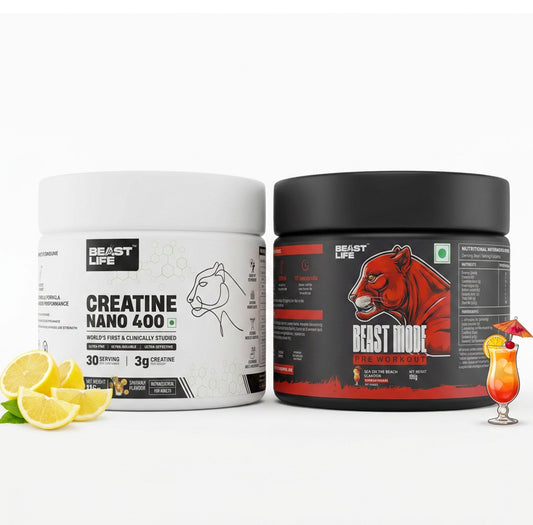 Nano + Preworkout
Combo pack | Creatine Nano 400 | Shikanji | 115 g + Preworkout | Sex On The Beach | 105 g
Regular price ₹1,224Sale price ₹1,224 Regular priceUnit price per₹1,69827% OFFSave 27%Sold out -
 Nano + Isorich
Combo pack | Creatine Nano 400 | Shikanji | 115 g + Isorich blend whey protein | Rich Double Chocolate | 924 g
Regular price ₹4,698Sale price ₹4,698 Regular priceUnit price per₹5,89820% OFFSave 20%Sold out -
 Sold outNano + Whey Protein
Combo pack | Creatine Nano 400 | Shikanji | 115 g + Pro Conc. whey protein | Rich chocolate | 924 g
Regular price ₹4,198Sale price ₹4,198 Regular priceUnit price per₹4,89814% OFFSave 14%Sold out -
 Nano + Performance Protein
Combo pack | Creatine Nano 400 | Shikanji | 115 g + Performance Protein | Chocolate | 1 kg
Regular price ₹2,998Sale price ₹2,998 Regular priceUnit price per₹3,56815% OFFSave 15%Sold out -
 Sold outShikanji | 115G
World’s First Creatine Nano 400 | Finest & Fastest Absorbing | 2X Strength | Shikanji | 115G
Regular price ₹599Sale price ₹599 Regular priceUnit price per₹89933% OFFSave 33%Sold out -
 Sold outBlueberry | 305G
World’s First Creatine Nano 400 | Finest & Fastest Absorbing | 2X Strength| Blueberry | 305G
Regular price ₹1,199Sale price ₹1,199 Regular priceUnit price per₹1,99940% OFFSave 40%Sold out -
 Sold outTropical Tango | 115G
World’s First Creatine Nano 400 | Finest & Fastest Absorbing | 2X Strength | Tropical Tango | 115G
Regular price ₹599Sale price ₹599 Regular priceUnit price per₹89933% OFFSave 33%Sold out -
 Sold outTropical Tango | 305G
World’s First Creatine Nano 400 | Finest & Fastest Absorbing | 2X Strength | Tropical Tango | 305G
Regular price ₹1,199Sale price ₹1,199 Regular priceUnit price per₹1,99940% OFFSave 40%Sold out -
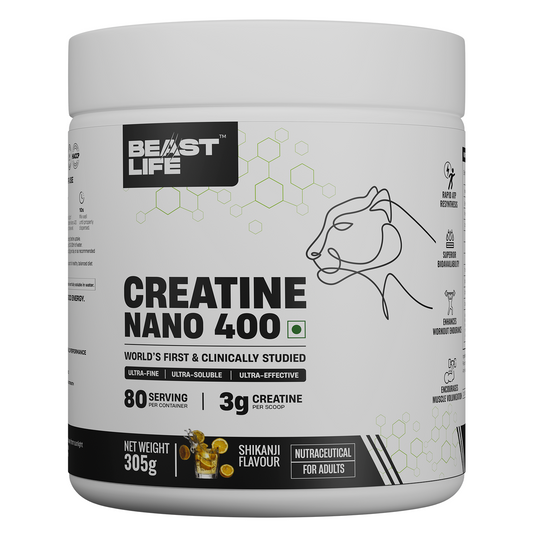 Sold outShikanji | 305G
World’s First Creatine Nano 400 | Finest & Fastest Absorbing | 2X Strength | Shikanji | 305G
Regular price ₹1,199Sale price ₹1,199 Regular priceUnit price per₹1,99940% OFFSave 40%Sold out -
Creatine Monohydrate | Litchi | 319 g
Regular price ₹699Sale price ₹699 Regular priceUnit price per₹1,42250% OFFSave 50%Sold out -
 Sold outPeach | 500g
Valentine’s Limited Couple Combo | Plastic Shaker Red 500 ml + Creatine Monohydrate Peach 500 g
Regular price ₹1,698Sale price ₹1,698 Regular priceUnit price per₹1,99915% OFFSave 15%Sold out -
Creatine Monohydrate | Peach | 500 g
Regular price ₹1,199Sale price ₹1,199 Regular priceUnit price per₹1,99940% OFFSave 40%Sold out -
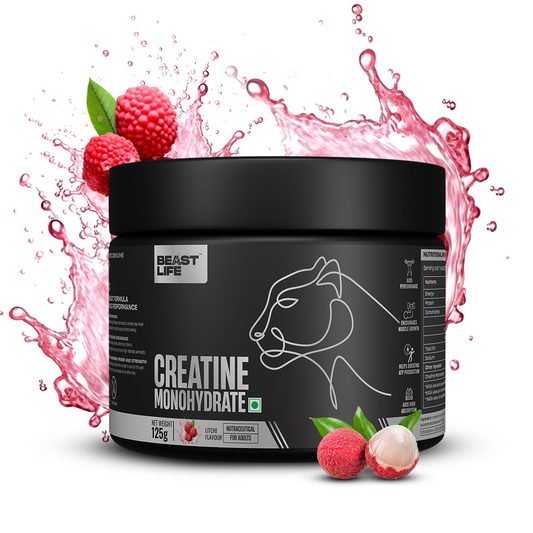
Creatine Monohydrate | Litchi | 125 g
Regular price ₹499Sale price ₹499 Regular priceUnit price per₹75533% OFFSave 33%Sold out -
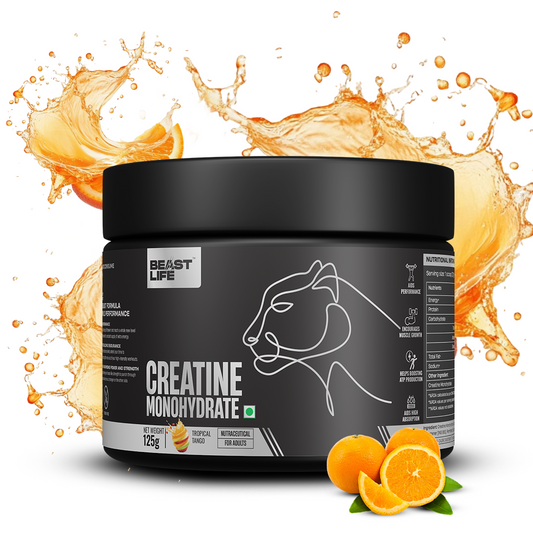
Creatine Monohydrate | Tropical Tango | 125 g
Regular price ₹499Sale price ₹499 Regular priceUnit price per₹75533% OFFSave 33%Sale -
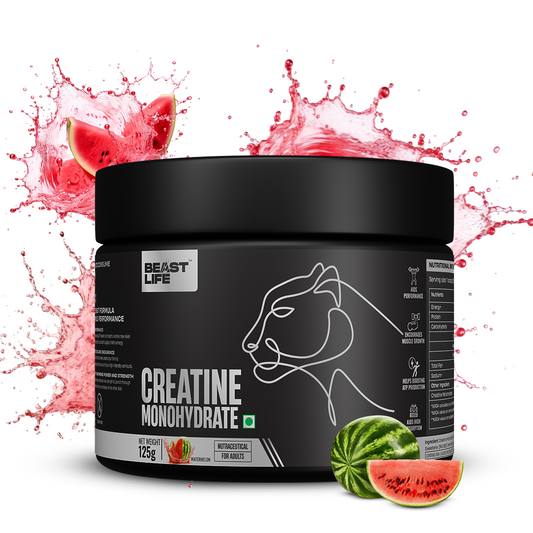
Creatine Monohydrate | Watermelon | 125 g
Regular price ₹499Sale price ₹499 Regular priceUnit price per₹75533% OFFSave 33%Sold out -
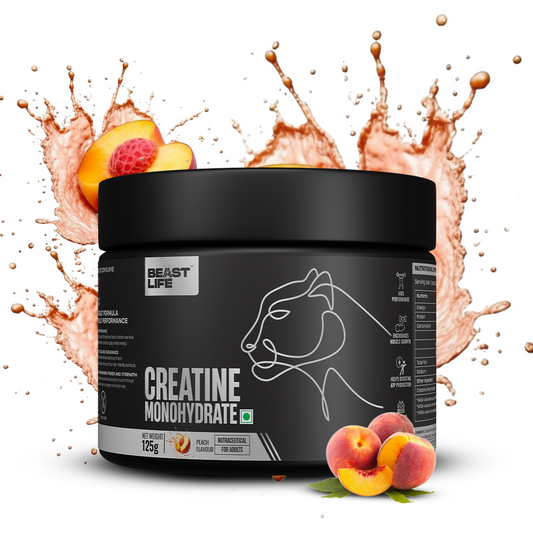
Creatine Monohydrate | Peach | 125 g
Regular price ₹499Sale price ₹499 Regular priceUnit price per₹75533% OFFSave 33%Sale -
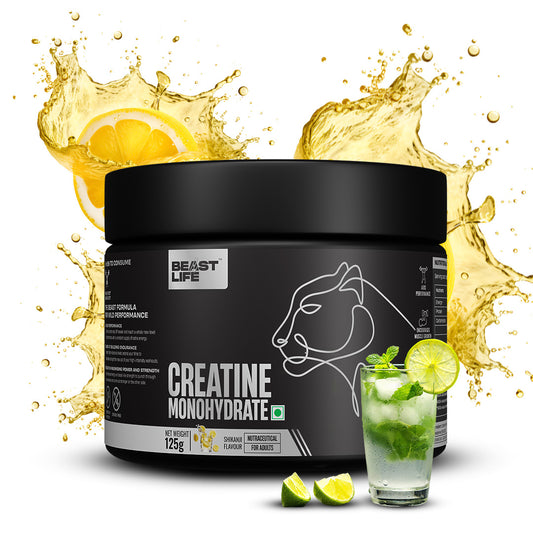
Creatine Monohydrate | Shikanji | 125 g
Regular price ₹499Sale price ₹499 Regular priceUnit price per₹75533% OFFSave 33%Sold out -
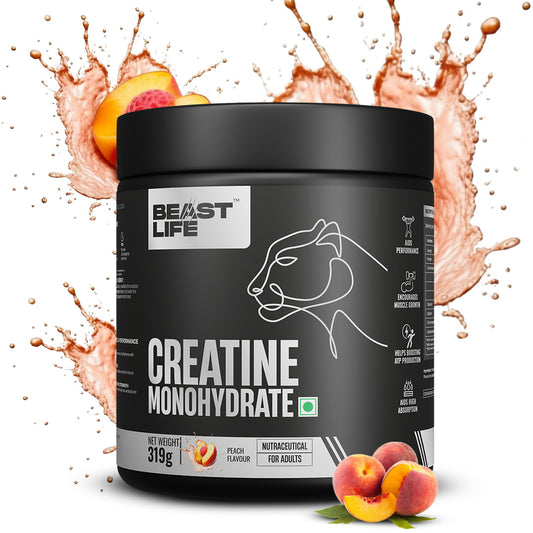
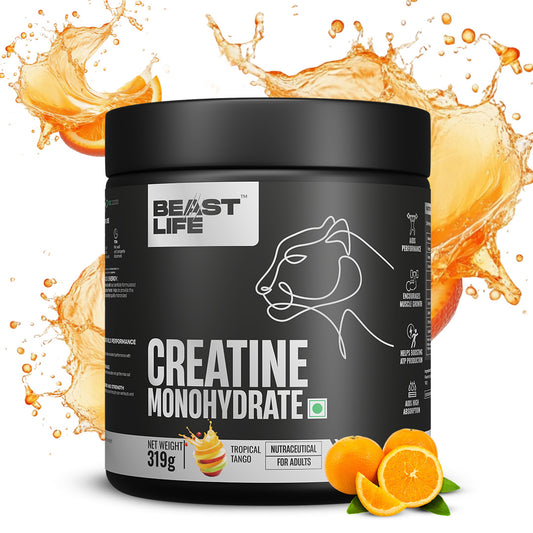
Creatine Monohydrate | Peach | 319 g
Regular price ₹699Sale price ₹699 Regular priceUnit price per₹1,42350% OFFSave 50%Sale -
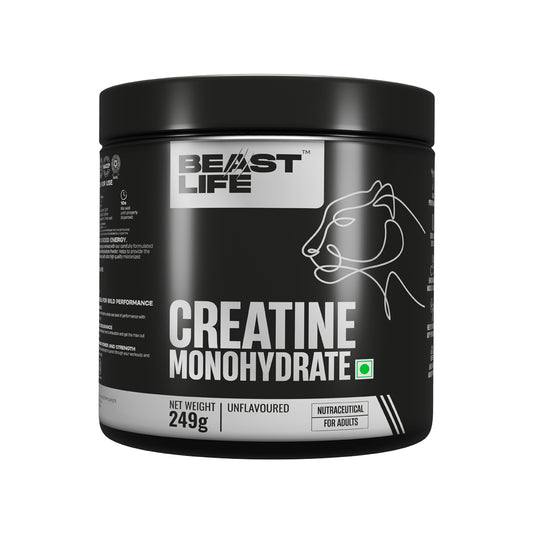
Super Micronized Creatine Monohydrate | 249G
Regular price ₹599Sale price ₹599 Regular priceUnit price per₹1,33455% OFFSave 55%Sale -
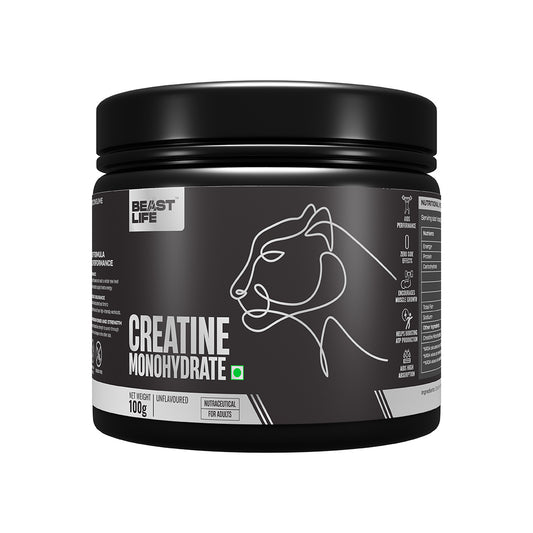
Super Micronized Creatine Monohydrate | 100G
Regular price ₹449Sale price ₹449 Regular priceUnit price per₹66632% OFFSave 32%Sale -
Super Micronized Creatine Monohydrate | 500 g
Regular price ₹1,049Sale price ₹1,049 Regular priceUnit price per₹1,79941% OFFSave 41%Sale -
Creatine Monohydrate | Watermelon | 500 g
Regular price ₹1,199Sale price ₹1,199 Regular priceUnit price per₹1,99940% OFFSave 40%Sold out -
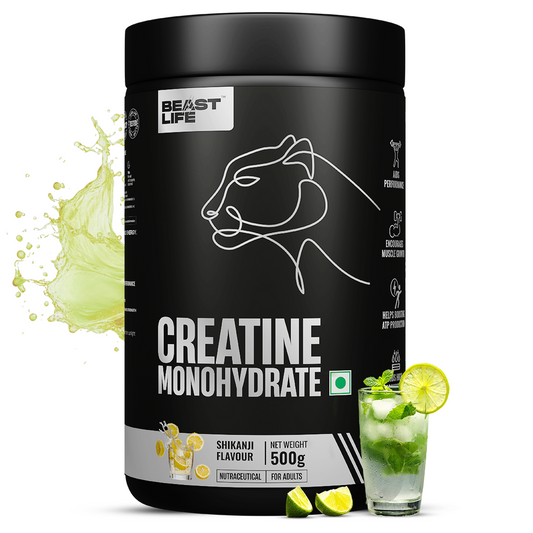
Creatine Monohydrate | Shikanji | 500 g
Regular price ₹1,199Sale price ₹1,199 Regular priceUnit price per₹1,99940% OFFSave 40%Sale -
 Tropical Tango | 500g
Valentine’s Limited Couple Combo | Bold Shaker Red 500 ml + Creatine Monohydrate Tropical Tango 500 g
Regular price ₹1,698Sale price ₹1,698 Regular priceUnit price per₹1,99915% OFFSave 15%Sale -
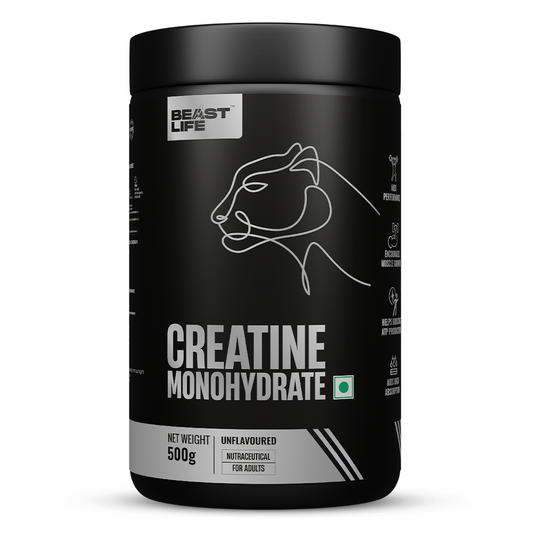
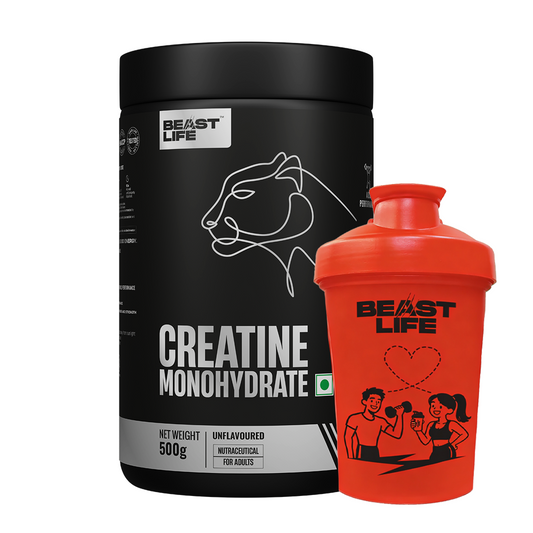 Unflavoured | 500g
Valentine’s Limited Couple Combo | Plastic Shaker Red 500 ml + Creatine Monohydrate Unflavoured 500 g
Regular price ₹1,548Sale price ₹1,548 Regular priceUnit price per₹1,79913% OFFSave 13%Sale -
 Sold outLitchi | 500g
Valentine’s Limited Couple Combo | Plastic Shaker Red 500 ml + Creatine Monohydrate Litchi 500 g
Regular price ₹1,698Sale price ₹1,698 Regular priceUnit price per₹1,99915% OFFSave 15%Sold out -
 Shikanji | 500g
Valentine’s Limited Couple Combo | Plastic Shaker Red 500 ml + Creatine Monohydrate Shikanji 500 g
Regular price ₹1,698Sale price ₹1,698 Regular priceUnit price per₹1,99915% OFFSave 15%Sale -

Valentine’s Limited Couple Combo | Plastic Shaker Red 500 ml + Creatine Monohydrate Watermelon 500 g
Sold outWatermelon | 500gValentine’s Limited Couple Combo | Plastic Shaker Red 500 ml + Creatine Monohydrate Watermelon 500 g
Regular price ₹1,698Sale price ₹1,698 Regular priceUnit price per₹1,99915% OFFSave 15%Sold out -
 Sold outBlueberry | 115G
World’s First Creatine Nano 400 | Finest & Fastest Absorbing | 2X Strength | Blueberry | 115G
Regular price ₹599Sale price ₹599 Regular priceUnit price per₹89933% OFFSave 33%Sold out -
 Nano + Whey Protein
Combo pack | Creatine Nano 400 | Unflavoured | 250 g + Pro concentrate whey protein | Rich chocolate | 1.848 kg
Regular price ₹8,197Sale price ₹8,197 Regular priceUnit price per₹9,79716% OFFSave 16%Sold out -
 Assorted Pack of 3
World’s First Creatine Nano 400| Assorted Pack of 3 | Finest & Fastest Absorbing | 2X Strength | King Size (115g Each)
Regular price ₹2,097Sale price ₹2,097 Regular priceUnit price per₹2,69722% OFFSave 22%Sold out -
 Sold outNano + Performance Protein
Combo pack | Creatine Nano 400 | Unflavoured | 250 g + Performance Protein | Chocolate | 2 kg
Regular price ₹5,897Sale price ₹5,897 Regular priceUnit price per₹7,19818% OFFSave 18%Sold out -
 Nano + Isorich
Combo pack | Creatine Nano 400 | Shikanji | 305 g + Isorich Blend whey protein | Rich Double chocolate | 1.848 kg
Regular price ₹9,197Sale price ₹9,197 Regular priceUnit price per₹11,79722% OFFSave 22%Sold out -
 Nano + Preworkout
Combo pack | Creatine Nano 400 | Tropical Tango | 115 g + Preworkout | Fruit punch | 105 g
Regular price ₹1,198Sale price ₹1,198 Regular priceUnit price per₹1,69829% OFFSave 29%Sold out -
 Nano + Performance Protein
Combo pack | Creatine Nano 400 | Unflavoured | 100 g + Performance Protein | Cold Coffee | 1 kg
Regular price ₹2,998Sale price ₹2,998 Regular priceUnit price per₹3,89823% OFFSave 23%Sale -
 Sold outNano + Performance Protein
Combo pack | Creatine Nano 400 | Unflavoured | 250 g + Performance Protein | Cold Coffee | 2 kg
Regular price ₹5,897Sale price ₹5,897 Regular priceUnit price per₹7,79824% OFFSave 24%Sold out -
Creatine Monohydrate | Tropical Tango | 319 g
Regular price ₹699Sale price ₹699 Regular priceUnit price per₹1,42350% OFFSave 50%Sold out -
 Nano + Mass Gainer
Combo pack | Creatine Nano 400 | Unflavoured | 250 g + Anabolic Mass Gainer | Belgian Chocolate | 2.5 kg
Regular price ₹3,798Sale price ₹3,798 Regular priceUnit price per₹5,91335% OFF35% OFFSold out -
 Sold outUnflavoured | 250G
World’s First Creatine Nano 400 | Finest & Fastest Absorbing | 2X Strength | 250G | Unflavoured
Regular price ₹1,199Sale price ₹1,199 Regular priceUnit price per₹1,99940% OFFSave 40%Sold out -
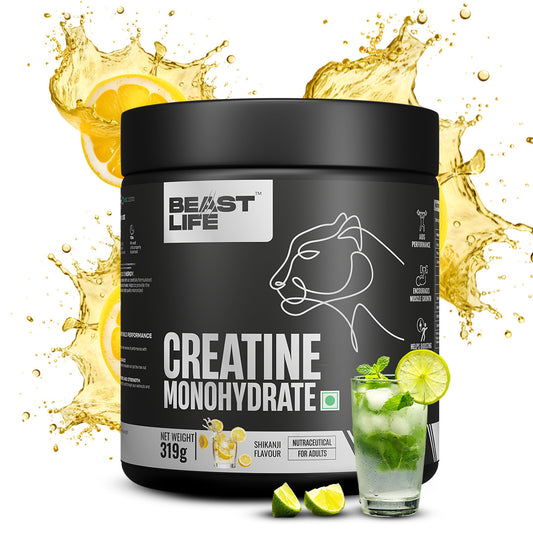
Creatine Monohydrate | Shikanji | 319 g
Regular price ₹699Sale price ₹699 Regular priceUnit price per₹1,42350% OFFSave 50%Sale -
 Sold outNano + Performance Protein
Combo pack | Creatine Nano 400 | Shikanji | 305 g + Performance Protein | Cold Coffee | 2 kg
Regular price ₹5,897Sale price ₹5,897 Regular priceUnit price per₹7,79824% OFFSave 24%Sold out -
Creatine Monohydrate | Tropical Tango | 500 g
Regular price ₹1,199Sale price ₹1,199 Regular priceUnit price per₹1,99940% OFFSave 40%Sale -
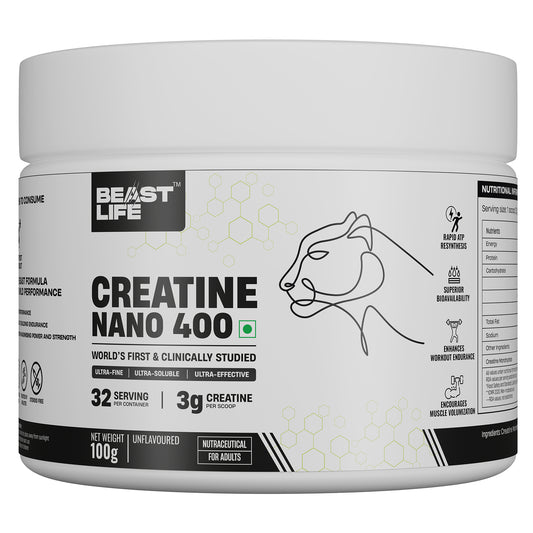 Unflavoured | 100G
World’s First Creatine Nano 400 | Finest & Fastest Absorbing | 2X Strength | 100G | Unflavoured
Regular price ₹599Sale price ₹599 Regular priceUnit price per₹89933% OFFSave 33%Sale -
 Nano + Isorich
Combo pack | Creatine Nano 400 | Unflavoured | 100 g + Isorich Blend whey protein | Rich Double Chocolate | 924 g
Regular price ₹4,698Sale price ₹4,698 Regular priceUnit price per₹5,89820% OFFSave 20%Sold out -
 Nano + Whey Protein
Combo pack | Creatine Nano 400 | Unflavoured | 100 g + Pro concentrate whey protein | Rich chocolate | 924 g
Regular price ₹4,198Sale price ₹4,198 Regular priceUnit price per₹4,89814% OFFSave 14%Sale -
 Nano + Performance Protein
Combo pack | Creatine Nano 400 | Unflavoured | 100 g + Performance Protein | Chocolate | 1 kg
Regular price ₹2,998Sale price ₹2,998 Regular priceUnit price per₹3,56815% OFFSave 15%Sale









Creatine for Every Stage of Male Training: Matching the Right Protocol to Your Goal
One supplement, four training goals, and a protocol question that most guides never ask: what does creatine actually mean for you specifically?
The phrase "best creatine for men" gets searched thousands of times a month. But the person training for powerlifting competition has almost nothing in common with the 35-year-old recreational gym-goer trying to hold muscle mass, or the 22-year-old focused on aesthetics, or the weekend recreational cricketer wanting better sprint output. They are all men. They all train. And creatine can support all of them, but not in the same way.
This guide is structured around training goals rather than basic supplement specs. It maps creatine use to what you are actually trying to achieve.
The Physiological Foundation: Why Creatine Works for Male Athletes
Creatine is stored in muscle as phosphocreatine. During explosive efforts lasting up to 10 seconds, the body uses the ATP-PCr energy system almost exclusively. Phosphocreatine donates a phosphate group to regenerate ATP, the immediate fuel for muscular contraction.
When phosphocreatine stores run low, output drops. Supplementation with creatine monohydrate raises resting phosphocreatine stores by 20 to 40 percent above baseline in most individuals, allowing the ATP-PCr system to sustain high-intensity output for marginally longer before fatiguing.
The downstream effect of this is not just one more rep. Over weeks and months of training, marginally more volume performed at higher intensity compounds into measurable differences in strength progression, lean tissue development, and power output.
Goal 1 - Strength and Powerlifting
Men training primarily for maximal strength, whether in competition or recreational powerlifting, are the most studied population in creatine research. The outcomes are consistent:
- Creatine supplementation supports higher training volume on primary compound lifts
- More volume over the same training cycle means greater progressive overload stimulus
- The effect is most pronounced on efforts under 30 seconds: squats, deadlifts, bench press, overhead press
Recommended Protocol for Strength Athletes
- Loading phase (optional): 20g per day split across 4 doses for 5 to 7 days to accelerate saturation
- Maintenance: 5g per day, timing is flexible, but post-training is practical
- Consideration: Men over 90kg of bodyweight may benefit from the higher end of the maintenance range (5g rather than 3g)
Goal 2 - Hypertrophy and Bodybuilding
For men focused on building muscle mass and improving body composition, creatine works indirectly but effectively. Hypertrophy is driven by mechanical tension and metabolic stress. Creatine supports both:
- Allowing more reps at a given weight before fatigue
- Increasing muscle cell hydration, which creates an anabolic intracellular environment
- Supporting greater training volume over time
Recommended Protocol for Bodybuilders
- Loading phase: Not required; steady daily dosing reaches saturation within 3 to 4 weeks
- Maintenance: 3 to 5g per day, post-workout with protein
- Stacking note: Combining creatine with a complete protein source post-training covers both the performance and recovery angles of the session
Pairing creatine with a quality protein supplement makes logical sense here. Check the beast whey protein range for options that complement a creatine-based stack.
Goal 3 - Endurance and Sport Performance
This is where recommendations become more nuanced. Creatine is fundamentally a phosphocreatine system supplement, which means its primary benefit is in short, explosive, high-intensity efforts. Sustained aerobic endurance (distance running, cycling, swimming at a moderate pace) draws from different energy systems.
However, most team sports and court sports (cricket, football, basketball, badminton) involve repeated sprint efforts, which sit in the creatine-relevant energy system. For these athletes:
Who Benefits and Who May Not
Benefits most:
- Athletes in sprint-heavy sports
- Athletes doing interval-based conditioning
- Men doing concurrent training (strength plus cardio)
Benefits least:
- Pure distance runners focus only on aerobic output
- Athletes where added muscle water weight would impair performance (certain weight-class sports)
Goal 4 - Men Over 35 Focused on Longevity and Muscle Retention
Age-related muscle loss (sarcopenia) begins gradually in the mid-30s. For men who train for long-term health, maintaining muscle mass and strength is increasingly important as a decade of training progresses.
Research suggests creatine may support muscle retention during periods of reduced training, assist in recovery from injury, and complement resistance training in older male populations. This is an area of growing research interest beyond pure athletic performance.
Key Considerations for Men Over 35
- Creatine is still appropriate at standard doses (3 to 5g per day)
- Adequate protein intake remains the primary lever for muscle retention; creatine is a complement, not a replacement
- Men on medications should consult a doctor before starting any new supplement
- No evidence of kidney or liver harm in healthy adults at standard doses across multiple years of use
Choosing the Right Creatine Product
Regardless of your training goal, the form recommendation is the same: creatine monohydrate. It is the most studied, most consistent, and most cost-effective form. Avoid products that combine creatine with high-stimulant pre-workout blends unless you know exactly what else you are consuming.
Look for products that provide:
- Pure creatine monohydrate with no proprietary blend obscuring the dose
- At least 3g of creatine per serving (ideally 5g)
- Verifiable third-party testing documentation
- No artificial colours in unflavoured products
FAQs: Best Creatine for Men
Q1: Does creatine cause hair loss in men?
This concern stems from a single study showing a rise in DHT (a hormone linked to hair follicle sensitivity). The study did not measure hair loss directly. Current evidence does not establish that creatine causes hair loss. Men with a family history of male pattern baldness who are concerned should consult a dermatologist.
Q2: Should men do a creatine loading phase?
Loading (20g per day for 5 to 7 days) accelerates saturation but is not required. Daily 3 to 5g dosing achieves the same saturation within 3 to 4 weeks. Loading can cause minor digestive discomfort in some men.
Q3: Can men take creatine every day, including rest days?
Yes. Consistent daily intake maintains elevated muscle creatine stores. Rest days are not a reason to skip the dose.
Q4: Is creatine useful for men who do mostly cardio?
Creatine offers limited benefit for pure steady-state endurance activity. Men who mix resistance training with cardio will see more benefit than those doing only long-duration aerobic work.
Q5: How long before men see results from creatine?
Muscle phosphocreatine saturation takes 3 to 4 weeks without loading, or 5 to 7 days with loading. Noticeable training effects typically emerge within the first 2 to 4 weeks.
Q6: Does creatine interact with caffeine?
Earlier research suggested caffeine might blunt creatine's effects, but more recent studies do not support this in real-world dosing conditions. Most men who take pre-workout (containing caffeine) alongside creatine experience no interference.


